Menopause
As hormonal fluctuations ensue with the grand finale to reproductive years, a domino effect of changes occur in women that can affect nearly every body system. Weight gain during menopause is one of them. However, there are other factors that play a part in the extra pounds put on during this time.
Continue reading to learn more about menopause weight gain in addition to what you can do to slim down to a thinner you.
What Hormones Affect Menopause Weight Gain?
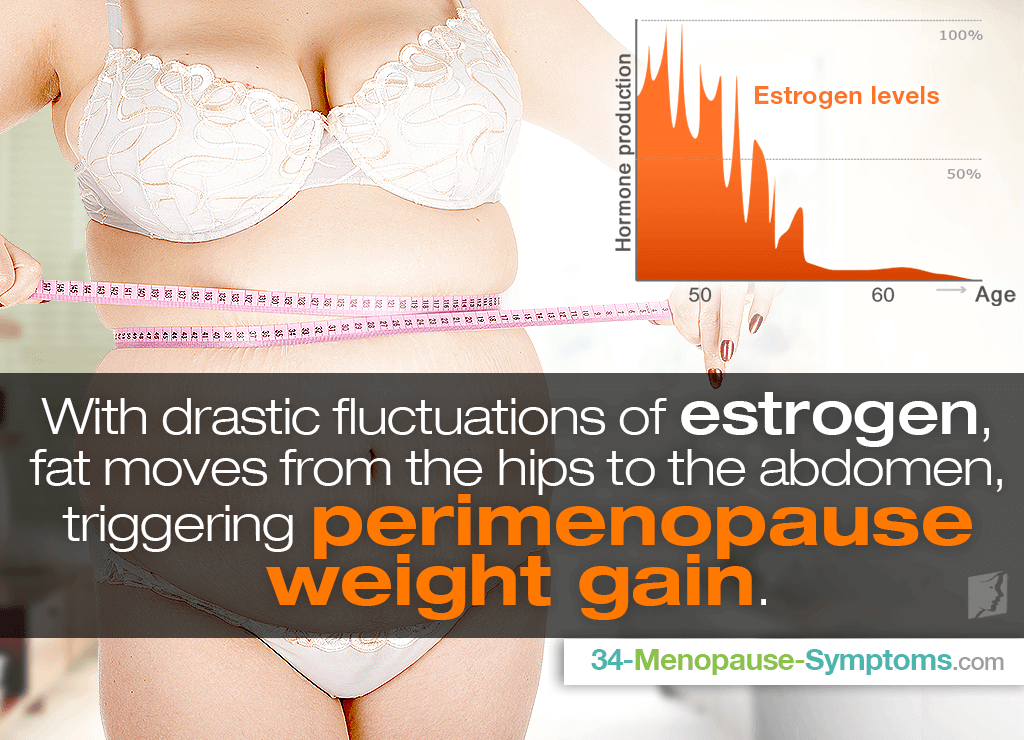
For starters, the principal reproductive hormone estrogen plays an instrumental role in metabolism and body fat accumulation. Throughout women's reproductive lives, the hormone is responsible for distribution of body fat. Then, with drastic fluctuations as fertile years come to an end, fat moves from the hips to the abdomen, triggering perimenopause weight gain.
Also, cortisol - the stress hormone - is responsible for some of the menopausal weight gain that women can experience in their 40s and 50s. When cortisol prepares the body for a stressful situation, it often signals the breakdown of fatty tissue to release energy. As such, chronic stress from menopause symptoms and other life events has been associated with increased fat around the midsection.
Interestingly enough, women with fat concentrated in their centers tend to secrete more cortisol than women with lower central fat in high-stress situations. This can create a vicious, never-ending cycle. In addition, cortisol prompts cravings for "comfort food," which are typically high in carbs and saturated fat. Routinely acting on these cravings can also lead to weight gain.
How is Menopause Weight Gain Related to Age?
As both men and women age, fat mass tends to increase, while muscle mass decreases. For many women, the start of these changes coincides with the menopause transition.
Furthermore, metabolism begins to slow down, which means fewer daily calories are required than before. Maintaining the same diet and size portions as years before can result in gaining extra weight.
What are Natural Menopause Weight Gain Treatments?
One of the best ways to treat weight gain caused by hormonal imbalance is to instill simple, lifestyle changes proven to reap hard results. Start by consuming a healthy, balanced diet rich in phytoestrogens to promote hormonal equilibrium; exercising regularly with aerobic and strengthening exercises to burn calories and build muscle mass; and relieving stress with relaxation methods, involving yoga, tai chi, meditation, or visualization techniques. For improved results, implement the use of alternative medicine, like phytoestrogenic herbal supplements or hormone-regulating supplements.
Keep in mind that weight redistribution due to changes in estrogen does not necessarily equate to weight gain, but the compounding factors during this time mean that many women do gain pounds as they go through menopause. Because menopausal weight gain can lead to other serious problems, such as heart disease, sleep apnea, and diabetes, it is crucial to maintain a healthy weight.
Sources
- Brown, L.M. & Clegg, D.J. (2011). Central Effects of Estradiol in the Regulation of Adiposity. Journal of Steroid Biochemistry and Molecular Biology, 122(1-3), 65-73. doi: 10.1016/j.jsbmb.2009.12.005
- Davis, S.R. et al. (2012). Understanding weight gain at menopause. Climacteric, 15(5), 419-429. doi: 10.3109/13697137.2012.707385
- Epel, E.S. et al. (2000). Stress and body shape: stress-induced cortisol secretion is consistently greater among women with central fat. Psychosomatic Medicine, 62(5), 623-632. Retrieved November 23, 2018, from http://www.ncbi.nlm.nih.gov/pubmed/11020091
- Roberts, C.J. et al. (2014). Increases in weight during chronic stress are partially associated with a switch in food choice towards increased carbohydrate and saturated fat intake. European Eating Disorders Review, 22(1), 77-82. doi: 10.1002/erv.2264
- St-Onge, M.P. & Gallagher, D. (2010). Body composition changes with aging: The cause or the result of alterations in metabolic rate and macronutrient oxidation? Nutrition, 26(2), 152-155. doi: 10.1016/j.nut.2009.07.004
- Yale News. (2000). Study: Stress may cause excess abdominal fat in otherwise slender women. Retrieved November 23, 2018, from https://news.yale.edu/2000/09/22/study-stress-may-cause-excess-abdominal-fat-otherwise-slender-women