Menopause

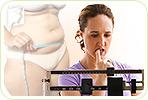
Menopause may cause weight gain. Hormones wreak havoc on your metabolism and make you gain weight. Below is a training workout that combines several major types of exercise to help burn fat.
Stretching

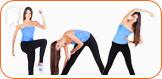
This is an important component of any exercise because it increases your flexibility and keeps you from getting injured. Maintain each stretching position for at least 10 seconds and repeat four times. Remember, you should stretch before and after you work out.
Aerobic Exercise
Although an aerobics-only workout isn't recommended, starting off with this type of exercise is a great way to warm up. If you're in the gym, running on a treadmill burns the most calories, and helps you build endurance. The recommended frequency from the American Heart Association is a half an hour of aerobics.
Resistance Training

After getting your blood pumping, try several weight-lifting exercises. However, it's best to forget the single-muscle exercises such as bicep curls that focus on only one part of your body. By doing more complex multi-joint exercises that work muscle groups instead of single muscles at a time, you can use your body in the way it is meant to be used. Plus, these exercises help you do more weight training in less time and burn more calories at once. See below for some suggestions on helpful multi-joint resistance training.
Leg press. This activity works the hamstrings, quadriceps and gluteus maximus. Remember to flex the hip and keep the knees unlocked as you lift and release.
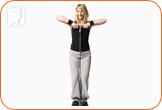
Shoulder press. This activity trains the triceps, trapezius, and deltoid muscles. To increase the amount of force you release as you push up, exhale simultaneously.
Lat pull down. This activity works the back muscles, latissimus dorsi. As you pull down, remember to keep an erect posture for maximum benefit.
Remember, when doing weight training exercises it is important to adjust the weight to a comfortable level for you. As a guideline, each activity should be performed in three sets each, each consisting of 15 repetitions. Take a minute-long pause before beginning a new set.
More Information about Weight Gain during Menopause
From the ages of 45 to 55, the average woman will gain 12 to 15 pounds as a result of menopause. Click on the following link to find out more about weight gain treatments available.
Sources
- Hutchinson, Susan M.D. "The Stages of a Woman's Life: Menstruation, Pregnancy, Nursing, Perimenopause, Menopause". November 2007.
- Love, Susan M.D. Menopause and Hormone Book. New York: Three Rivers Press, 2003.
- BMJ Group. "Menopause: What is it?" Patient Leaflet. 2007