Menopause
Maintaining a healthy diet and exercise routine is key to supporting your body's fitness levels and ensuring a long and healthy life. Eating well and exercising regularly can will also regulate your menstrual cycle, ensure good sexual health, prevent vaginal dryness, and provide relief from cramps and other menstrual symptoms.
Read on to learn more about menstruation and exercise.
Menstruation during the Reproductive Years
A woman's reproductive years are marked by her first period and her last. Menstrual cramps, spotting, discharge, and other types of vaginal bleeding are all normal occurrences during this time.
Irregular bleeding is also highly common and can be caused by a variety of factors, including:
- A cervical polyp, a small growth within or near the surface of the cervix
- Ovulation
- Extreme emotional stress
- Excessive exercise
Menstruation and Exercise
Menstrual periods are commonly accompanied by cramps and other forms of discomfort. These irregularities are often triggered by changes in the levels of estrogen and progesterone, two hormones that regulate the menstrual cycle.
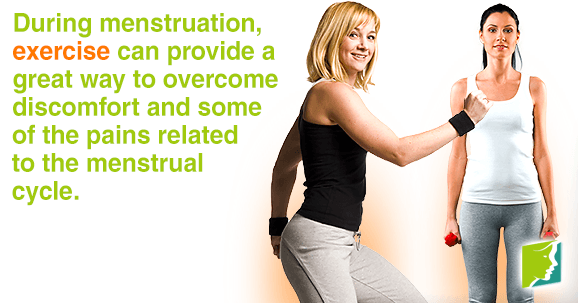
High stress levels, under-eating, relationship issues, and other high stress circumstances can all have a negative impact on your body. However, exercise can help to combat these effects and restore your natural balance. Menstrual symptoms such as headaches and cramps can also be seen to lessen among those women engaging in frequent exercise.
Can I Do Too Much Exercise?
Exercise is needed to ensure that the body runs efficiently. However, doing too much exercise, especially without warming up beforehand, can be damaging, as it reduces the body's ability to fight off sickness and stress. Running a marathon without prior training, for example, is inadvisable due to the strain it puts on the body.
Throughout your period, your body is put under more stress than normal. While doing daily exercise can help reduce these stress levels, exercising excessively will reverse the effect and exert an additional toll on your body.
Lifestyle Changes
Exercise can help alleviate menstrual pain and prepare the body for menstruation. Be careful, however, to not overexert yourself. Develop your exercise routine slowly, letting your body adjust.
Combining your new routine with a proper diet is also important, as this will ensure that your body receives the nutrients it needs to function efficiently. Wholegrain foods, healthy home-cooked meals, and fruits and vegetables are all great ways of ensuring your diet is a healthy and beneficial one. Vitamins and alternative medicines are also worth considering as a way of supplementing your diet if necessary.
If you experience severe pain during your menstrual cycle, talk to a medical practitioner. They will be able to help you discover how best to treat your symptoms.
Click on the following link to learn about vaginal dryness treatments.
Sources
- "Vaginal Dryness". Mayo Clinic Health Resource. 2007
- The Changing Body: Menopause Handbook.(n.d)."Vulvovaginal Symptoms". Retrieved from www.menopause.org
- Love, Susan M.D. Menopause and Hormone Book. New York: Three Rivers Press, 2003.