Menopause
A consequence of significant reductions in estrogen levels, vaginal dryness affects 60% of women once they reach postmenopause. This very normal and natural hormonal alteration can result in inadequate levels of moisture being secreted throughout the vagina.
Unfortunately, it is common for women to become too embarrassed by their experience of vaginal dryness to discuss it, which keeps them from receiving appropriate treatment. Regardless, there are different safe and simple solutions that can help relieve this distressing and uncomfortable symptom. Read on to discover more.
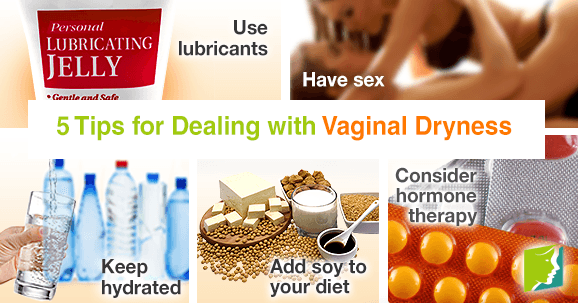
Use lubricants
Over-the counter lubricants are readily available and regularly bought by people of all ages. If you are experiencing painful intercourse as a consequence of inadequate moisture, then buying a water-based lubricant and applying it before and during sex is advisable. This can make sex painless and pleasurable once again. Alternatively, if you find yourself suffering from general vaginal irritation and itchiness, then specific moisturizers are capable of providing relief.
Have Sex
It might seem counter-intuitive, but having more sex is highly recommended for those suffering from vaginal dryness. Whilst external lubrication might be needed at first, engaging in more sex actively encourages blood flow to the genitalia and can provide long term relief. Nevertheless, try to take sex slowly and prolong foreplay as much as possible, to give time for natural lubrication to occur. Many women will find that their desire for intercourse increases after menopause.
Keep Hydrated
Staying hydrated is vital to maintaining not only sexual health, but overall wellbeing. Try to drink the recommended eight to ten glasses of water a day.
Add Soy to Your Diet
Soy is high in isoflavones and lignans, two phytoestrogens known to alleviate vaginal dryness. Consequently, filling your diet with products like soy milk, edamame beans, and tofu is deemed essential to relieving the symptoms of vaginal dryness.
Consider Hormone Therapy
Hormone replacement is deemed to be a highly effective method of counteracting the effects of postmenopausal vaginal dryness. It can be taken in tablet, cream, or ring form. All three varieties, however, thicken the lining of the uterus and increase lubrication by providing the vagina with estrogen.
Depending on the chosen presentation, hormone therapy may be used immediately before intercourse, every few days, or under a slow-release form that will last up to three months. Make sure to consult a doctor before trying vaginal estrogen therapy, as this course of therapy may have side effects or be contraindicated in some cases - such as for women with a strong family history of breast or ovarian cancer.
Recommendation
Postmenopausal vaginal dryness is the result of severe hormonal changes wreaking havoc with your body's functions and nothing to be embarrassed about. Reclaim your sex life by adopting some of these simple methods. Follow this link to find out more about the treatments for postmenopausal vaginal dryness.
Sources
- "Vaginal Dryness". Mayo Clinic Health Resource. 2007
- The Changing Body: Menopause Handbook.(n.d)."Vulvovaginal Symptoms". Retrieved from www.menopause.org
- Love, Susan M.D. Menopause and Hormone Book. New York: Three Rivers Press, 2003.