Menopause
Vaginal dryness is a common symptom of menopause, and along with causing general discomfort, itchiness, and dryness in the area, it can also cause pain and uncomfortable friction during sex.
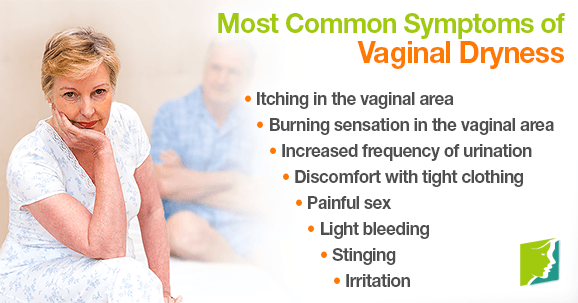
The Most Common Symptoms of Vaginal Dryness
While vaginal dryness is usually easy to recognize, it can have a range of symptoms that are not just limited to dryness. Common symptoms associated with vaginal dryness include:
- Itching in the region of the vagina and vulva
- Painful sex
- Light bleeding during or after sex
- Burning sensation in the vaginal area
- Stinging
- Irritation
- Increased frequency of urination
- Discomfort when wearing underwear or tight clothing
How Quickly Do the Symptoms Develop?
Usually, vaginal dryness develops just as quickly as any other condition or menopausal symptom. Once initial vaginal dryness has developed, it can quickly lead to painful sex and irritation in the area.
However, if you are noticing that your symptoms are brought on suddenly but are not permanent, there may be something else causing vaginal dryness. Douching, soaps, and using other products that contain harsh chemicals that strip the vagina of its natural moisture and upset its pH level can cause temporary vaginal dryness.
Could the Symptoms Be Associated with Any Other Condition?
Symptoms of most menopausal conditions can be linked to other health complications, so it is important that you discuss all symptoms and concerns with your doctor in order to rule out this possibility. Other conditions that might be causing vaginal dryness aside from menopause include sexually transmitted diseases, urinary tract infections (UTIs), or another complication with the reproductive system.
Vaginal dryness and pain during sex also occur when a woman is not aroused during sex. To combat this and have enjoyable sexual experiences, it is important to include enough foreplay, oral sex, massaging, and other activities that you find arousing into your sex life.
More Information about Vaginal Dryness
Vaginal dryness is a normal symptom of the menopause, yet it can be difficult for some women to talk about it. One of the most common treatments for vaginal dryness caused by hormonal changes during menopause is hormone replacement therapy (HRT). This can be applied directly to the vagina in the form of a moisturizer or suppository. Non-hormonal moisturizers are also available that are meant to be used on a regular basis to moisturize the vagina. Women also use lubricants before having sex in order to reduce friction caused by vaginal dryness.
If you are worried or vaginal dryness is lowering your quality of life, you should visit your gynecologist to receive further advice and treatment.
Sources
- Mayo Clinic Staff. (2008). Vaginal Dryness. Retrieved October 13, 2015, from http://www.mayoclinic.org/diseases-conditions/vaginal-dryness/basics/definition/con-20029192
- National Institutes of Health. (2013). Vaginal Dryness. Retrieved October 13, 2015, from https://www.nlm.nih.gov/medlineplus/ency/article/000892.htm