Menopause
Most women experience a problem with vaginal dryness at some point in their lives. However, women are more likely to experience vaginal dryness as they age and reach menopause. Vaginal dryness can have a range of causes. If a woman is not properly aroused, it is difficult for her body to produce the correct amount of moisture to make sex enjoyable. This is why it is important to incorporate foreplay and other arousing activities into sex and especially leading up to sex.
If arousal is not the problem, vaginal dryness may be due to hormonal changes that happen during menopause and cause the vagina to become drier and have thinner walls. This can make sex painful and uncomfortable, but vaginal lubricant can help solve this problem. Vaginal lubricants can be water-based, oil-based, or silicon-based, and a wide range or different types of lubricants are available.
Beyond Lubricants
Whereas vaginal lubricants are usually only used before and during sex and are not absorbed into the vagina, moisturizers are used on a regular basis and are absorbed into the vagina in order to moisturize it. Many women choose to use vaginal moisturizers, which can contain hormone replacement therapy and have been shown to reduce vaginal dryness.
Water-based Lubricants
Water-based lubricants are the most widely recommended vaginal lubricant because they do not tear condoms, unlike the alternative oil-based lubricants. Water-based lubricants also do not stain, can be removed with water, and do not increase a women's risk for infection like oil-based lubricants.
Silicone-based Lubricant
Silicone-based lubricant should be used more sparingly and usually requires cleanup. If you are looking to have sex in the shower, a hot tub, or a body of water, silicone-based lube is the way to go. This is because having sex in water can wash away the vagina's natural moisture and any other type of lubricant that may be in use.
Oil-based Lubricant
Oil-based lubricants are not recommended for use as vaginal lubricants because they are not designed to maintain the pH balance of the vagina. Women who use these moisturizers may be more susceptible to conditions like yeast infections or bacterial vaginosis. Also, these formulas often damage condoms during sex, making them ineffective.
More types of lubricant
Lubricants come in many different forms. They can be flavored, which can add another dimension to oral sex with a condom. Lubricants can also come in forms that cause warming and tingling, which many women enjoy, but these forms can agitate the vagina and cause pain in some women.
More Information about Vaginal Lubricants
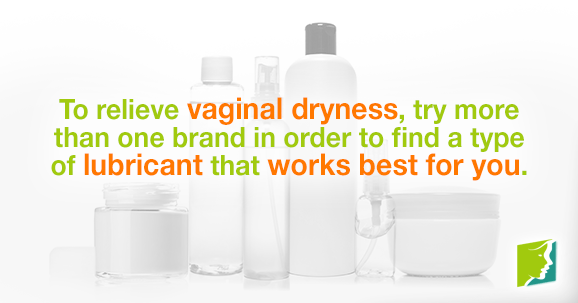
The right vaginal lubricant reduces friction in the vagina and makes sex easier and more enjoyable. Most lubricants can either be purchased over-the-counter at a pharmacy or online. It is a good idea to try more than one brand in order to find a type of lubricant that works best for you. Click on the following link for more information on alleviating vaginal dryness during menopause.
Sources
- National Institutes of Health. (2013). Vaginal dryness. Retrieved October 13, 2015, from https://www.nlm.nih.gov/medlineplus/ency/article/000892.htm
- North American Menopause Society. (2015). Vaginal and Vulvar Comfort: Lubricants, Moisturizers, and Low-dose Vaginal Estrogen. Retrieved October 13, 2015, from http://www.menopause.org/for-women/sexual-health-menopause-online/effective-treatments-for-sexual-problems/vaginal-and-vulvar-comfort-lubricants-moisturizers-and-low-dose-vaginal-estrogen