Menopause
During menopause women may suffer from a number of skin related conditions which can trigger the experience of tingling extremities. While these conditions are a natural result of lowered estrogen levels, they can be uncomfortable and have a detrimental impact on a person's self-image. One of the strangest of these symptoms is the sensation of tingling extremities. Read the following paragraphs for advice on handling the symptoms of tingling extremities.
What Are the Causes of Tingling Extremities?
It is as common for menopausal women to experience skin problems as they finish menstruating as it is for their adolescent counterparts when they start. This is because both experiences are triggered by the body's hormones rapidly changing and the skin reacting to these changes.
What Exactly Are the Symptoms of Tingling Extremities?
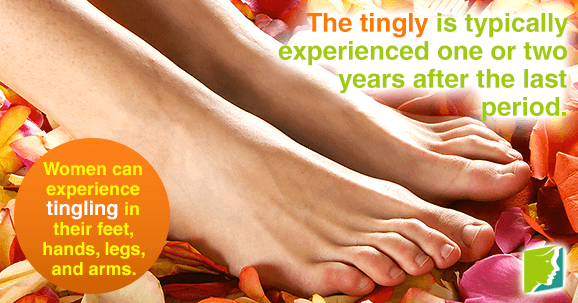
The tingly and prickly feeling that women commonly describe their experience as is known as formication. Typically it is experienced one or two years after the last period.Doctors disagree on the nature of its exact cause, in the majority of cases, formication goes away on its own after a relatively short period. One theory suggests that tingling extremities are triggered by an overworked or overheated liver- a condition that occurs when hormones change rapidly during menopause.
Any variation of sensitive skin can become painful if left un-treated. It is therefore advised that sufferers see a dermatologist.
Very often, the remedies that successfully treated sensitive teenage skin will also work during menopause. In general however, it is advised that sufferers: moisturize their skin, use less oily makeup, frequently wash pillowcases and wash sensitive areas (like the face) with special washes and prescription medications.
The Dangers of Tingling Extremities
Tingling extremities are often more of a cause for concern than sensitive facial skin. Although many women experience tingling in their feet, hands, legs, and arms, these sensation can occasionally be a sign of a more serious problem such as diabetes, vitamin deficiency, calcium depletion, potassium depletion or blood circulation problems.
It is advised therefore, that you see a doctor if you experience tingling extremities for prolonged periods of time. This is because a doctor will be able to rule out any serious medical cause for skin problems, and the chance of confusing menopause with the onset of a serious disease.
How Can I Deal with Tingling Extremity Symptoms in Menopause?
Because menopausal tingling extremities are the result of estrogenic fluctuations, the most effective method of relieving the symptoms is to boost or stabilize the hormones. This can be done in a variety of ways; the easiest and healthiest being to formulate a regular diet and exercise pattern. A healthy body is less likely to suffer from hormone fluctuations and therefore less likely to experience symptoms. In addition to this, alternative medicines exist which act as hormone balance or boosters in the body. When taken alongside a healthy lifestyle approach they can prove hugely effective in reducing the symptoms of menopause.
Sources
- Hutchinson, Susan M.D. "The Stages of a Woman's Life: Menstruation, Pregnancy, Nursing, Perimenopause, Menopause". November 2007.
- Love, Susan M.D. Menopause and Hormone Book. New York: Three Rivers Press, 2003.
- BMJ Group. "Menopause: What is it?" Patient Leaflet. 2007