Menopause
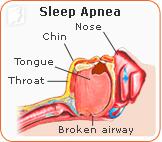
Sleep apnea is a disorder which causes a person to stop breathing periodically during sleep. These periods can last for ten seconds or longer and may go unnoticed. There are several types of sleep apnea during menopause:
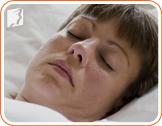
Obstructive sleep apnea: characterized by an obstruction to the air passageway, such as a collapse of muscle tissue in the throat or enlarged tonsils, and is the most prevalent type of the disorder. Obstructive sleep apnea is usually associated with loud snoring.
Central sleep apnea: occurs when the chest muscles and diaphragm stop working temporarily.
- Mixed apnea: is a combination of obstruction and central sleep apnea.
Treatment and diagnosis is critical because this sleeping disorder can cause high blood pressure and heart problems. In addition, it may adversely affect weight and memory.
How is Sleep Apnea Related to Menopause?
Sleep apnea is one of the most common sleep disorders that affect women during perimenopause. Although there is still no definitive scientific research linking sleep apnea to menopause, some studies suggest that lower levels of estrogen may cause cases of sleep apnea. In a four-year study that concluded in 2000, Terry Young, Ph.D., shared with the American Lung Association and the American Thoracic Society that perimenopausal women are eight times more susceptible to developing sleep apnea than premenopausal or postmenopausal women. In a similar study carried out by Edward Bixler, Ph.D., at Penn State College of Medicine, postmenopausal women were five times as likely to develop sleep apnea if they did not choose to take hormone replacement therapy.
How is Sleep Apnea Diagnosed?

The first step to curing sleep apnea is to get a proper diagnosis. This can often be difficult if you don't realize that you have the disorder or don't recognize your loud snoring as sleep apnea. According to experts, only 10-25% of people are diagnosed as having the disorder because of these complications.
Sleep apnea is usually diagnosed after running tests in a polysomnography (sleep study). The patient's heart rate, along with brain and muscle activity, are measured during sleep. In some cases, the patient's throat will also be examined to look for possible obstructions.
A case of sleep apnea is confirmed when the patient has ceased breathing at least five separate times, with each period lasting for ten seconds or longer. The patient may also exhibit an erratic heartbeat and a drop in blood oxygen readings.
How Can I Cure my Sleep Apnea?
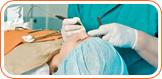
Treatments for sleep apnea vary from small changes that you can make on your own to more complex surgeries. A doctor may recommend changing your sleeping position or losing weight. In other cases, nasal or septal surgery may be necessary to rid the airway of obstacles.
More Information
Sleep apnea is just one of 70-80 sleep disorders that can affect menopausal women. Among the most common disorders are insomnia, restless leg syndrome and narcolepsy. Click the following link for more information about sleep apnea treatments.
Sources
- Breus, Michael. "Menopause and Sleep". MedicineNet.
- Love, Susan M.D. Menopause and Hormone Book. New York: Three Rivers Press, 2003.
- Walsleben, Joyce M.D. "Ask the sleep expert: menopause and insomnia". National Sleep Foundation.
- "Your Guide to Healthy Sleep". National Institute of Health, April 2006.