 Menopause
Did You Know?
The rate of sleep apnea jumps sharply after menopause, affecting 9% of postmenopausal women.
Studies show that lack of sleep leads to decreased function in the daytime, including lack of concentration, irritability, and a weaker immune system. For women undergoing menopause, this can be even more devastating, as they are dealing with shifting hormone levels - which are often the root of their sleep problems - as well as the everyday stresses of life.
Fortunately, sleep disorders can be managed and even treated. Keep reading to learn all about sleep disorders: what they are, what causes them, who is at risk, and how to treat them.
About Sleep Disorders
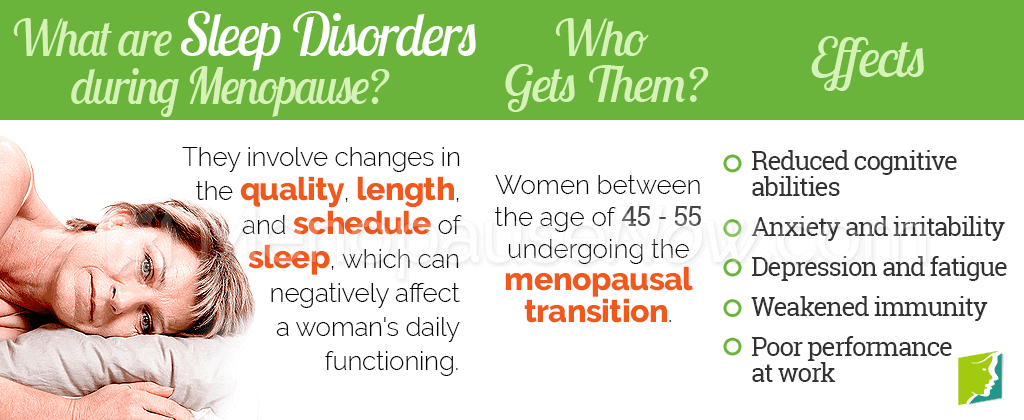
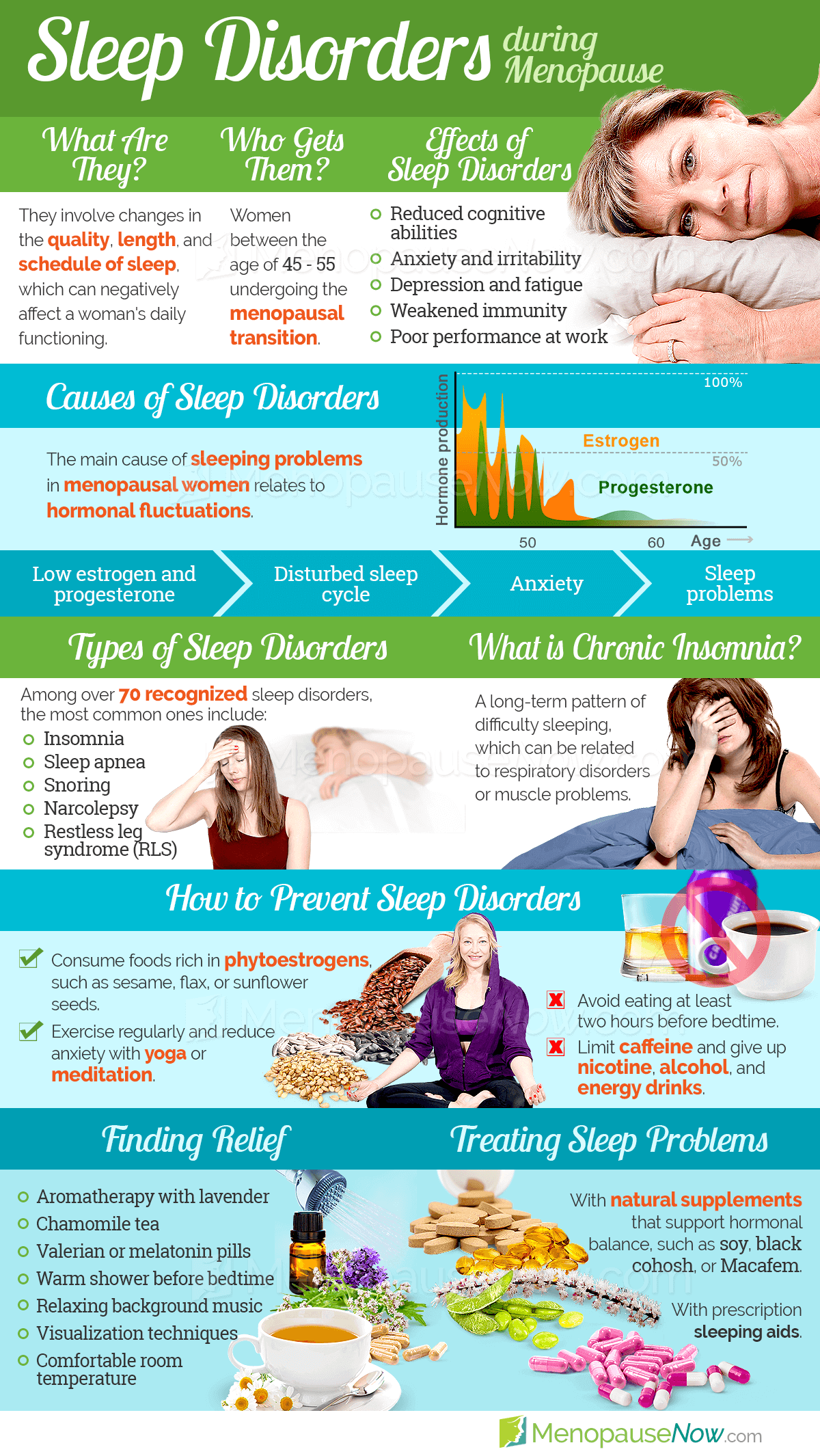
On average, a healthy adult needs approximately seven to eight hours of undisturbed sleep per night. Yet, many women do not receive the proper amount. Those with sleep disorders experience the persistent problem of going without the recommended amount of uninterrupted sleep, leading to a weakened immune system, increased anxiety, and the worsening of pre-existing medical conditions.
This may also have a strain on professional or personal relationships and cause emotional disturbances. Women wake up more often during the night and as a result are tired and cannot concentrate during the day. The sleep cycle is highly important for overall well-being, and sleep deprivation can negatively impact health in a number of ways.
Symptoms of sleep disorders
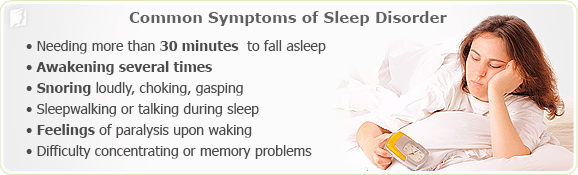
Sleep disorders can encompass a variety of symptoms and conditions. However, there are certain warning signs that are fairly common. If experiencing any of the following, the existence of one or more sleep disorders is likely.
Types of sleep disorders
The Numbers
Approximately 16% of postmenopausal women report having trouble falling asleep, and 41% report waking up frequently during the night.
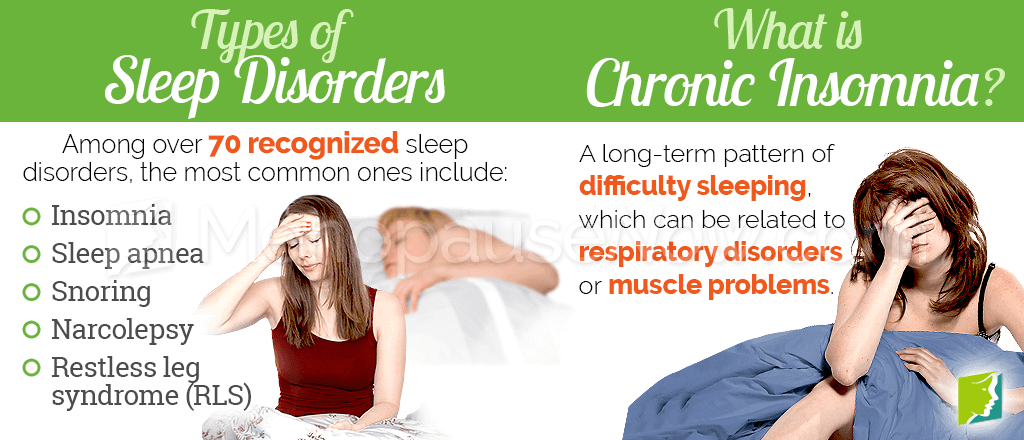
There is a wide variety of sleep disorders. A recent Gallup poll estimates that there are 65 million sufferers of the 70 - 80 types of sleep disorders that exist. As people age, there is a tendency to get less sleep in general, as well as less time spent in the deepest, most beneficial periods of the sleep cycle.
For menopausal women, the most commonly reported sleep disorders are insomnia, sleep apnea, snoring, narcolepsy, and restless leg syndrome.
Menopause Symptoms Related to Sleep Disorders
The results of symptoms caused by these sleep disorders are often closely correlated with other menopause symptoms. For example, night sweats, the nighttime version of hot flashes, can disrupt sleep patterns by causing a woman to awaken several times during the night. Sleep disorders can also lead to further depression and anxiety, which may make sleep difficult. This can cause a vicious circle of lack of sleep, fatigue, and other symptoms of menopause.
Effects of sleep disorders
While it is possible to suffer from sleep disorders such as sleep apnea and be completely unaware of this during the night, these interruptions in a woman's sleeping patterns may have a noticeable effect on her daily life. Below is a list of common effects of sleep disorders:
Striking Data
The rate of insomnia among women increases by 40% during the transitional period of perimenopause to postmenopause.
- Reduced capacity for learning, speech, and memory
- Inability to concentrate on daily tasks
- Higher chance of car accidents
- Tendency towards weight gain
- Weakened immune system
- Damage to professional and personal relationships
- Increased irritability
- Depression and fatigue
Click on the following link to learn more about sleep disorders, or continue reading to find out about the likely causes of sleep disorders.


Causes of Sleep Disorders
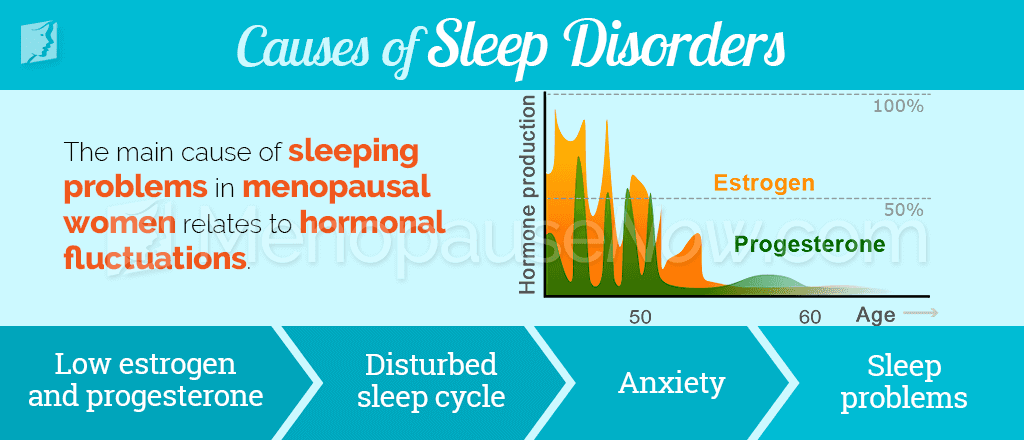
The primary reason why a woman may develop sleep disorders during menopause relates to the hormonal fluctuations that are taking place within her body. Declining levels of hormones, specifically of estrogen and progesterone, affect a woman in myriad ways, one being the regulation of the sleep cycle.
Estrogen and progesterone's effects on sleep
As mentioned above, estrogen and progesterone affect sleep. A decrease in the levels of either hormone can cause sleep disorders, although each one influences sleep differently. The information below specifies how estrogen and progesterone affect sleep.
How a Decline in Estrogen Affects Sleep
- Slows down the intake and secondary production of magnesium, a mineral that helps muscles to relax.
- Linked to hot flashes and night sweats, which interrupt the sleep cycle. Linked to sleep apnea, which disturbs breathing during the night.
How a Decline in Progesterone Affects Sleep
- Progesterone has a sleep-inducing effect. When levels decline, the ability to fall asleep soundly does as well.
- Linked to insomnia, and inability to fall asleep promptly.
Although hormonal imbalance is generally the root cause of sleep disorders during menopause, a woman's psychology can also play a part in her sleep disorders.
Psychological causes of sleep disorders
Psychological Disruptions
- Depression
- Anxiety
- Stressful work situations
- Relationship problems
- Financial issues
During the years leading up to menopause, a woman typically undergoes a great deal of changes involving her body, which can lead to feelings of anxiety, depression, and stress.
Anxiety is linked to an inability to fall asleep, while depression has been known to cause early morning waking.
Problems at work or issues in interpersonal relationships can add to stress levels and make it difficult to relax enough to obtain a full night of rest. This can cause insomnia or other sleep disorders. Many women often have extremely hectic schedules, balancing multiple responsibilities, which can lead to little time for sleep.
Other risk factors for sleep disorders
Some women are more prone to sleep disorders than others. Below is a list of risk factors that can make a woman more susceptible to sleep disorders:

- Obesity
- High blood pressure
- Age
- Use of caffeine or nicotine
- Use of drugs or alcohol
- Inactivity or lack of exercise
- Working night shifts
Click here to learn more about the causes of sleep disorders, or continue reading below to find out the breadth of treatment options available for sleep disorders.



Sleep Disorders Treatments
There is no denying the importance of a good night's sleep, yet unfortunately for many menopausal women, this is not a reality. As sleep disorders during menopause are commonly caused by hormonal fluctuations, three approaches can be considered for treating sleep disorders: (1) Lifestyle Changes, (2) Alternative Medicine, and (3) Medications. Keep reading to learn more about these three possible approaches.
Lifestyle changes to promote sleep
This primary level of treatment involves the least amount of risk, though conversely, it requires the highest amount of self-discipline. Many times, some simple changes in lifestyle can lead to huge benefits in fighting sleep disorders.
Sleep disorders can be a result of other common menopause symptoms, such as night sweats or anxiety. This may lead to fatigue during the daytime and difficulty with normal daily tasks. In this case, the importance of a good night's sleep cannot be stressed enough. Simple changes such as exercising, practicing stress relief techniques, cutting out caffeine and alcohol, and using the bedroom only for sleep and sex can all be helpful.
Tips for a Good Night of Sleep
- Go to bed only when sleepy
- Sleep only in the bedroom
- Get up at the same time each morning
- Discontinue caffeine and nicotine
- Exercise daily
- Avoid alcohol
- Limit fluid intake in the evening
- Practice relaxation techniques
However, if these simple lifestyle changes are not enough and a woman is still suffering from sleep disorders, she may want to move on to the next level of treatment, alternative medicine. Often, a combination of both levels is the most effective approach.
Alternative medicine
If symptoms of sleep disorders persist, women may turn to natural medicine to alleviate their symptoms. Therapies such as massage and aromatherapy have been found to bring some women relief as they help induce a calm state of mind, making it easier to fall asleep. In addition, herbal supplements can be a good option for treating sleep disorders.
If still suffering from sleep disorders, women may turn to the third, most drastic option: pharmaceutical relief.

Medications
Various prescription sleep aids are available, including zolpidem, diphenhydramine, and doxylamine, as well as others. While these may be effective in the short term to get to sleep, in the long run, they can lead to dependency and do not promote the healthy REM sleep that is necessary for overall health.
Before beginning prescription medications, consulting a trusted medical professional is recommended in order to fully understand the potential benefits and risks involved with this treatment option.
Click on the following link to read more specifics about each of the treatments for sleep disorders in order to learn how to alleviate sleep disorders in a safe and effective way.




Sources
- Kravitz, H.M. & Joffe, H. (2011). Sleep During the Perimenopause: A SWAN Story. Obstetrics and Gynecology Clinics of North America, 38(3), 567-586. doi: 10.1016/j.ogc.2011.06.002
- Love, S. (2003). Menopause and Hormone Book. New York: Three Rivers Press.
- National Heart, Lung, and Blood Institute. (2011). Your Guide to Healthy Sleep. Retrieved April 19, 2016, from http://www.nhlbi.nih.gov/files/docs/public/sleep/healthy_sleep.pdf