Menopause
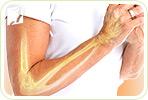
Menopause is a natural stage in a woman's life that significantly lowers the levels of estrogen in her body. As a result, she may experience many symptoms such as irregular periods, hot flashes, fatigue, and even osteoporosis in her later years. In fact, 80% of the identified cases of osteoporosis are among postmenopausal women.
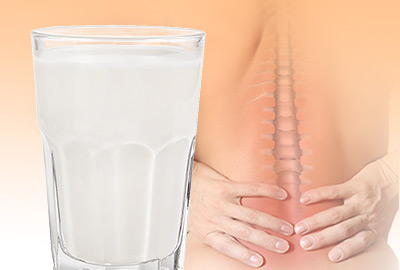
Fortunately, women can help improve bone density and even prevent osteoporosis by increasing their consumption of milk, improving their diet, and exercising regularly.
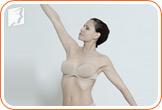
In order to improve bone strength, bones need to be kept stressed. There has to be enough resistance so that your bones to feel it and can generate a response. To make the most out of your workout, it is recommended that you do strength training exercises at least two to three times a week. This of course, should be done in conjunction with aerobic exercises.
Below are some tips on how to get your bones into shape at home and in the gym in order to prevent osteoporosis.
At Home
Get on all fours
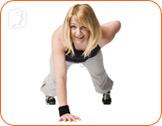
Do some push-ups. This will help build arm and core strength.
Medicine balls
These come in a variety of sizes and weights. If you have a tilted trampoline, you can throw the balls and catch them. You can easily substitute medicine balls with weights, bricks, water bottles, or even soup cans to keep costs low. To improve upper body strength and balance, simply extend your arms out to the side, hold them as long as you can, and repeat.
Step-ups and lunges
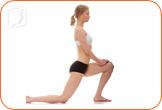
Women who fall or slip on ice during winter months can easily injure or break their hips. Help strengthen your hip bones and improve your balance by doing both step-ups and lunges.
Jump rope
Impact workouts are the best for building bone strength. Cyclists for example are often identified as having low bone density because of their low-impact sport. Jumping rope on the other hand, will help improve cardiovascular health.
In the Gym
Squats
If done correctly, squats can help strengthen your spine, an incredibly weak area if neglected, and improve balance. If you're using weights, find a spotter at the gym so that you don't injure yourself.
Pull ups
Don't be embarrassed when starting out with these, they're difficult for everyone! With practice however, you'll easily be able to pull your own weight and build upper body strength.
Dumbbells
Ask for instruction on your first day. Using weights can be dangerous and harmful if done improperly.
Women who are going through the menopausal transition are not only more at risk of suffering from low bone density and osteoporosis, but also breast cancer and other health complications. Maintaining a healthy weight and strong bones is pivotal to maintain overall wellness and preventing injury. Talk to your doctor to find out more information about diet, exercise, and other treatments to prevent osteoporosis.
Sources
- Cleveland Clinic.(n.d)."Menopause and Osteoporosis". Retrieved from http://my.clevelandclinic.org
- American Physical Therapy Association.(n.d)."What You Need to Know about Osteoporosis".Retrieved from www.apta.org.
- New York State Department of Health.(n.d)."Calcium and Healthy Bones". Retrieved from www.health.state.ny.us.
- National Osteoporosis Foundation.(n.d)."Prevention: Who's at Risk". Retrieved from www.nof.org.