Menopause
Night sweats during menopause can be burdensome and difficult to manage. On top of all the other symptoms menopause brings, night sweats and hot flashes quite possibly bring the most discomfort. However, menopause and its many symptoms are not insurmountable. Changing levels of estrogen, progesterone, and testosterone cause the severity of menopause symptoms to ebb and flow. Hormonal imbalance is the direct cause of night sweats, among other things, and there are many different options for keeping the body even-keeled. Read on for more information on how to prevent night sweats.
What Are Night Sweats?
Approximately 75% of women will suffer from night sweats before, during, and possibly after menopause. Characterized by extremely heavy sweating during the night, night sweats can disrupt sleep and be uncomfortable and inconvenient - often requiring a change of clothes or bed linens.Night sweats symptoms will vary from woman to woman, as the intensity of menopause is experienced individually. Some women may have intense and severe night sweats, while others may experience few or none at all.
How to Prevent and Manage Night Sweats
During menopause, there are things women should avoid:
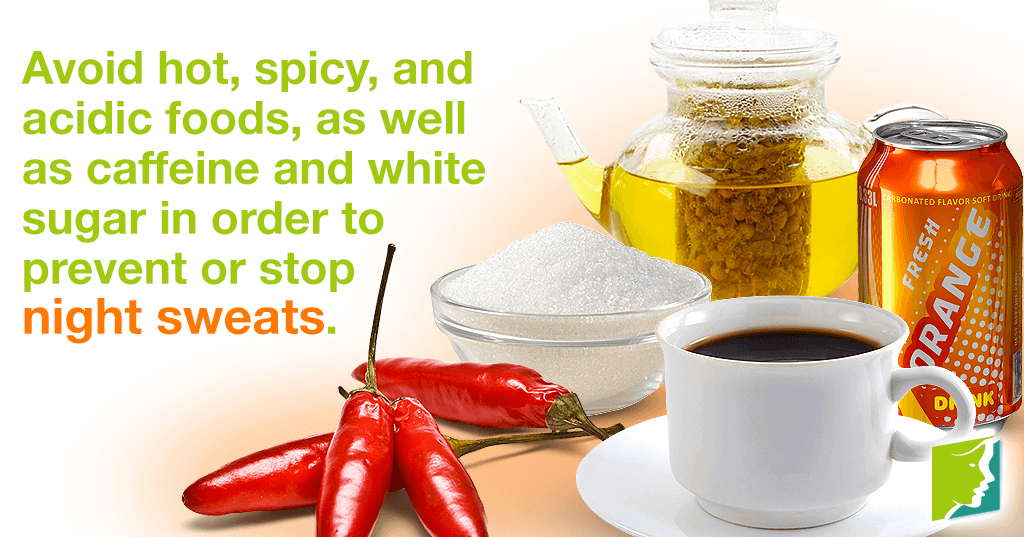
Diet. Hot and spicy foods can exacerbate night sweats during menopause. These foods raise body temperature and may possibly make night sweats even more unbearable for women. The same goes for acidic foods, hot drinks, caffeine, and processed sugar. All of the aforementioned foods and drinks should be avoided in the hours before bed, as they may throw off hormonal balance and raise the likelihood of night sweats.
Heavy clothing. Before and during menopause, women should avoid heavy clothing that may cause the body to sweat. Especially to bed, light and breathable clothing is the best option.
Alcohol and tobacco. Both alcohol and tobacco have an effect on hormonal balance. Just as well, both substances can increase heat in the body and will make night sweats worse.
Stress. Stress levels may just be the biggest culprit to worsening menopausal symptoms such as night sweats. Try to avoid situations that raise stress levels in order to keep the body cool and calm.
In order to manage night sweats during menopause, women should seek out:
Breathing practices. A study at the National Institute of Health (NIH) suggests that this may help ease night sweats and relieve stress during menopause.
Optimal air flow. Create the best possible air flow in the room in order to cool the body down. Tools such as a fan, air conditioning, and open windows can make all the difference.
Eat healthy. Foods that are rich in vitamins B, C, and D, can greatly help women during menopause - especially those combating night sweats.
Treatments
Although they are unpleasant and can seem permanent, it is possible to stop night sweats by following one or more of the methods listed above. Every woman experiences menopause differently, but many have found effective relief from its symptoms by implementing certain lifestyle changes. Click the following link to learn about how to stop night sweats.
Sources
- The National Institute of Health. "Signs of the Menopausal Transition" www.nih.gov
- Boston Women's Health Collective. "Hot Flashes, Night Sweats and Sleep Disturbances". Our Bodies, Ourselves, 2006.
- Von Muhlen, DG, et al. "A community-based study of menopause symptoms and estrogen replacement in older women". Maturitas. Sept 1995; 22(2):71-8.