Menopause
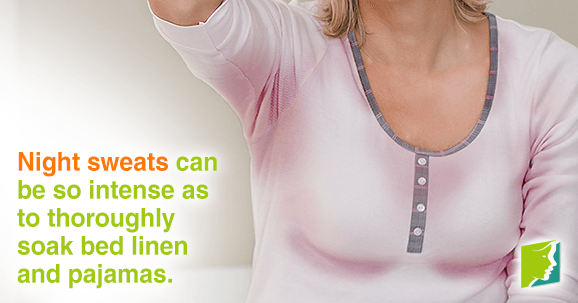
Over 80% of women will experience night sweats at some point during menopause. Night sweats can cause a woman to wake up and find her sheets soaked with sweat. Night sweats are a common side effect of menopause and do not normally indicate a serious medical condition. Although it is hard to completely get rid of night sweats, you can take steps to lessen the frequency and severity of them.
Why Do I Wake up in Soaking Sheets?
Night sweats, also known as “nocturnal hyperhydrosis”, are episodes of abrupt sweating during the night. Sweat is a natural body function, meant to keep the body cool and remain fresh. People normally perspire to help cool the body, making them feel more comfortable; however, when this occurs unnecessarily during the night, it can easily disrupt normal sleep patterns. Excessive perspiration often means the sufferers will wake up shivering from cold and uncomfortable.
Getting a good night's sleep is necessary for overall physical and mental well-being. Understanding the cause of night sweats is a crucial first step for managing them and sleeping well.
There are 2-4 million sweat glands that are used to cool the body and help maintain a constant, normal temperature. When perspiration is produced at higher than normal levels, such as during night sweats, it is known as hyperhydrosis. This is formally defined as being when the production of sweat by the axillary lymph nodes exceed 100 mg in an interval of five minutes.
What Causes Night Sweats?
The main cause of night sweats, when it is a symptom of menopause, is hormonal fluctuations. Women who are going through menopause experience a drop in progesterone and estrogen. This results in the body misunderstanding messages being sent to the brain about internal temperature, which can lead to night sweats. However, this process is not completely understood and more research needs to be done to better understand why and how night sweats happen.
Night sweats during menopause can be triggered by:
- Over-heating during sleep
- Spicy foods before bedtime
- Hot or alcoholic drinks before bedtime
- Warm environments
- Excessive exercising right before bedtime
- Stress, anxiety, and depression
How Can I Best Deal with Night Sweats?
Maintaining a fit and healthy body can help reduce night sweats. Many woman also choose to use hormone replacement therapy or natural medicine to treat night sweats. Talk to your doctor about a treatment method that is right for you.
Altering your sleeping environment may also be helpful. Sleeping in light colored sheets made of natural fibers such as bamboo or wool will help your body to breathe better as you sleep. Using fan, loosely layered pajamas, and keeping water by your bedside can also help.
Learn more ways to handle night sweats.
Sources
- Mayo Clinic Staff. (2014). Night Sweats. Retrieved from http://www.mayoclinic.org/symptoms/night-sweats/basics/definition/sym-20050768
- Rodriguez, D. (2012). Night sweats keeping you up? Retrieved from http://www.everydayhealth.com/sleep/night-sweats.aspx?xid=aol_eh-qht_10_20120601_&aolcat=ESO&icid=maing-grid7|main5|dl27|sec1_lnk1%26pLid%3D167917