Menopause
Once the menopause transition passes, a woman becomes postmenopausal, and remains that way for the rest of her life.
Even if you are postmenopausal, your hormones may not have completely balanced out yet. You may still experience some menopausal symptoms like night sweats, which can lead to fatigue, insomnia, and stress. While you are waiting for your body to become accustomed to its new chemistry, here are some tips to help identify the source of your night sweats.
Common Causes of Night Sweats
Hormone imbalance
You may still be experiencing an imbalance of estrogen and progesterone. This will level out over time and your night sweats should disappear. If they don't, it is wise to contact a physician.
Certain foods
Spicy and warm foods like garlic, chili peppers, hot drinks, and meals can raise body temperature and provoke night sweats. Excess sugar and caffeine can also trigger them.
Certain medications
Some medications like antidepressants, hypoglycemic agents, and hormone replacement therapy (HRT) can induce night sweats as a side effect. While a change in medication may be appropriate, it's important to always talk to a doctor before stopping medication or changing dosages.
Surroundings
If you have sheets or pajamas made from synthetic fibers or your bedroom is too hot, you may be at risk for night sweats. Especially during the summer months, a fan or air conditioning may be necessary to cool the room down.
Tips for Alleviating Postmenopausal Night Sweats
Research shows that 75% of women experience night sweats during menopause, and a number of these women continue to have them after the transition as well. Nonetheless, there are many management tips that women can practice at any stage of menopause to keep night sweats under control.
Watch what you eat
Smart eating habits will not only promote overall wellness, but can target night sweats specifically. For instance, herbs like sage and peppermint have cooling properties. Foods containing phytoestrogens, such as soy and flaxseed, can also help raise the body's estrogen levels to reduce or eliminate night sweats.
Hydration is key
Dehydration is one of the major causes of elevated body heat, so it's important to replenish the water you lose while sweating. Sufficient water is also necessary to keep all of the body's process in working order, including its internal thermostat.
Exercise
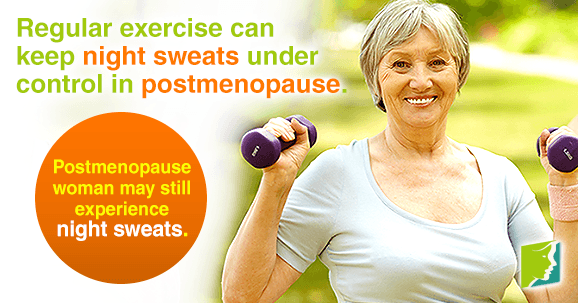
Regular exercise is one of the easiest ways to maintain hormonal balance, since physical activity benefits the endocrine system. Exercise also lowers resting heart rate, improves blood circulation, and contributes to weight loss, among other health benefits.
Wear natural fibers
Wearing fabrics made out of cotton and other breathable fibers can help regulate body temperature, whereas synthetic fibers like polyester and spandex can make the body feel hotter, possibly contributing to night sweat episodes. Synthetic fabrics also trap sweat against the skin, potentially increasing body odor, and personal discomfort.
Though night sweats may continue into postmenopause, they are usually caused by certain habits and ongoing hormonal fluctuations. If lifestyle changes are ineffective, hormone-regulating herbal supplements can help balance levels without dangerous side effects. Click on the following link to learn more about night sweat treatments.
Sources
- The National Institute of Health.(n.d). "Signs of the Menopausal Transition".Retrieved Septiember 18,2015 from www.nih.gov
- Boston Women's Health Collective. "Hot Flashes, Night Sweats and Sleep Disturbances". Our Bodies, Ourselves.
- Von Muhlen, DG, et al. "A community-based study of menopause symptoms and estrogen replacement in older women". Maturitas. Sept 1995; 22(2):71-8.