Menopause
Many women suffer from night sweats and a dry mouth during menopause. While these symptoms can be unpleasant, they are a normal part of menopause and can be treated.
Night Sweats and Dry Mouth Explained
Dry mouth refers to the lack of moisture and saliva in a person's mouth. A dry mouth can happen on occasion to anyone; however, it is not normal for severe dry mouth sensation to become chronic.
Night sweats refer to a problem clinically known as “sleep hyperhidrosis” and result in unpleasant episodes for many sufferers. Night sweats are characterized by fever and excessive sweating during the night. Although sweating is a perfectly healthy bodily function necessary to keep cool, night sweats disrupt sleep and leave sufferers shivering in soaked sleepwear and bed linen.
What Causes Night Sweats and Dry Mouth?
During menopause, the body's endocrine system undergoes a dramatic shift with an overall decrease in the levels of estrogen and progesterone. One of the side effects of this change is night sweats. When the body experiences a decline in estrogen, the hypothalamus sends out inaccurate signals that the body is overheating and must cool rapidly. Excess sweat and flushed skin result, creating the sensation of night sweats.
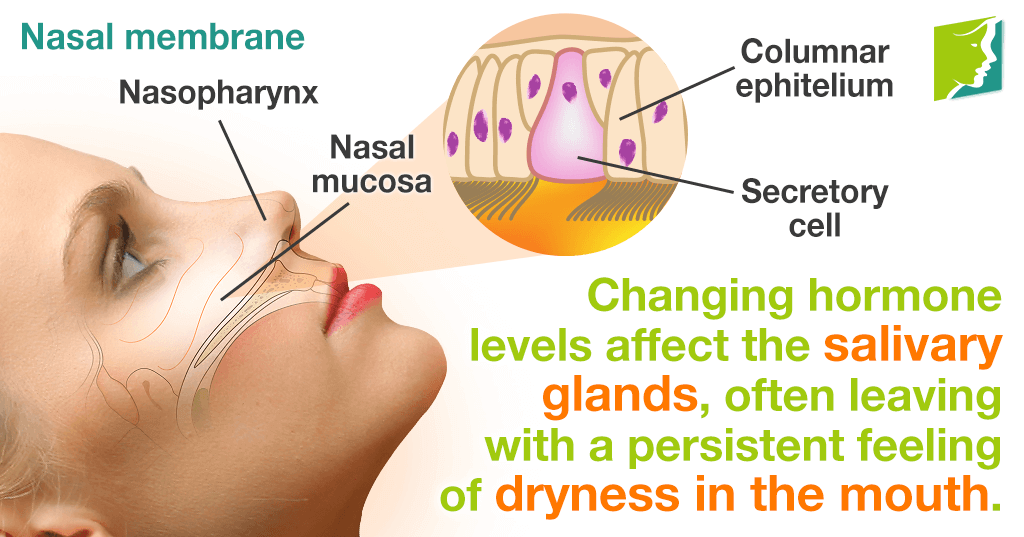
During menopause, changing hormone levels also affect the salivary glands, often leaving menopausal and postmenopausal women with a persistent feeling of dryness in the mouth. This can be accompanied by a bitter taste, as well as problems with bad breath. This is because the mucus membranes dry out. This can also cause dryness in both the nasal passages and the vagina.
If you often have a dry mouth, it can indicate that a more serious medical condition may exist. Saliva does more than just keep the mouth wet: it helps digest food, protects teeth from decay, prevents infection by controlling bacteria in the mouth, and makes it possible for you to chew and swallow. See your doctor if you're concerned.
What Can I Do About Night Sweats and Dry Mouth?
Because night sweats and dry mouth are linked to a drop in estrogen levels, the first practical step is to restore these hormonal levels back to normal. This can be done by maintaining a balanced diet and regular exercise routine.
Tips for avoiding dry mouth:
- Sip water or sugarless drinks.
- Avoid drinks with caffeine.
- Chew sugarless gum or suck on sugarless hard candy to stimulate saliva flow.
- Don't use tobacco or alcohol.
- Be aware that eating overly spicy or salty foods while experiencing dry mouth can be painful.
It's vital that the body stays healthy to maintain stable hormonal levels during this transitional period. In addition to lifestyle changes, there is a range of alternative treatments that may help to reduce night sweats and dry mouth. Natural remedies often target the source of hormonal imbalance and can be effective in combating side effects of menopause. Read further to get more information on some of the treatments available for night sweats and dry mouth.
Sources
- The National Institute of Health.(n.d) "Signs of the Menopausal Transition" .Retrieved from www.nih.gov
- Boston Women's Health Collective. "Hot Flashes, Night Sweats and Sleep Disturbances". Our Bodies, Ourselves, 2006.
- Von Muhlen, DG, et al. "A community-based study of menopause symptoms and estrogen replacement in older women". Maturitas. Sept 1995; 22(2):71-8.