Menopause
Night sweats are one of the most common symptoms of the menopause, and can be one of the most difficult to treat. Between 35% and 50% of menopausal women experience night sweats. Luckily, there are different lifestyle adjustments that can help manage night sweats, so you can get a good night's sleep and wake up feeling refreshed in the morning.
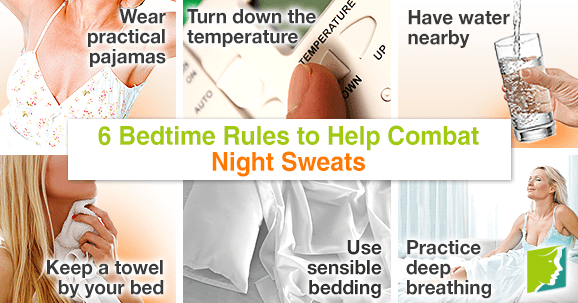
Wear breathable pajamas
Try not to wear anything that is too restrictive or tight. Choose sleepwear that is lightweight and breathable, so that you can adjust to your body's temperature. Some companies even make special sleepwear for menopausal woman that is feminine, comfortable, and helps wick away sweat.
Turn down the temperature
Keep your bedroom at a cool temperature. Research has shown that the ideal temperature for sleeping is between 60 and 68° F, or between 16 and 20°C. Along with sleeping in a cool room, also try putting a hot water bottle at your feet when you sleep. This may seem counter-intuitive, but when your core temperature drops, your hands and feet warm up. By keeping your feet warm and sleeping in a cool room, you can balance your body temperature and sleep better.
Have water nearby
Drinking ice water before going to sleep helps to keep you hydrated and cool. Keep some water near your bed so that you have an easy way to cool down your body if a night sweat hits. Instead of keeping water in a glass, try keeping it in a thermos so it will still be cool when you need it in the middle of the night.
Keep a towel by your bed
Women often change their sheets after an episode of night sweats, which can help them to fall back asleep. Avoid this by sleeping on a towel or a sheet that can easily be changed. Additionally keep a cloth by the side of your bed, so you can mop up any beads of sweat from your head and chest during the night.
Use bedding made of natural fibers
Certain fabrics may be triggering your night sweats or making them worse. Choose linen or cotton bed sheets and use layers of blankets instead of a thick comforter. This way you will be able to peel off blankets as your temperature changes. Natural fibers also allow your body to breathe.
Practice deep breathing
Deep breathing can help your body cool down when a night sweat hits. Breathing slowly and deeply from your abdomen will help you to cool off and relax.
Recommendation for Night Sweats
Night sweats not only are uncomfortable and disruptive during the night, but they can also cause you to feel drained and tired during the day. However, this is not something women should have to live with. These six tips should help you in your fight against night sweats. Click here for more about night sweats treatments.
Sources
- Harvard Women's Health Watch. (2009).Perimenopause: rocky road to menopause.Retrieved from http://www.health.harvard.edu/womens-health/perimenopause_rocky_road_to_menopause
- O'Connor, A. (2009, August 3). The Claim: Cold Temperatures Improve Sleep.The New York Times.Retrieved from http://www.nytimes.com/2009/08/04/health/04real.html
- Reynolds, G. (2014, July 17).Let's Cool It in the Bedroom. The New York Times.Retrieved from http://well.blogs.nytimes.com/2014/07/17/lets-cool-it-in-the-bedroom/