 Menopause
While night sweats can be uncomfortable and disruptive, they don't usually signal a more serious underlying condition. In fact, night sweats are one of the most common menopause symptoms, with up to 75% of women experiencing them at some point during menopause.
When a woman approaches menopause, she may have many questions about the potential symptoms, including night sweats. Understanding what to expect, why these symptoms occur, and how to manage them can help a woman better prepare for this transitional period. Keep reading to learn more about night sweats.
About Night Sweats
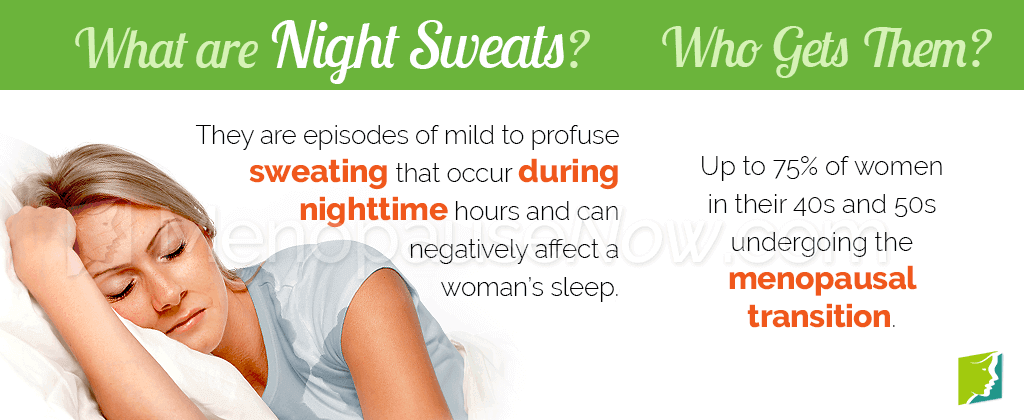
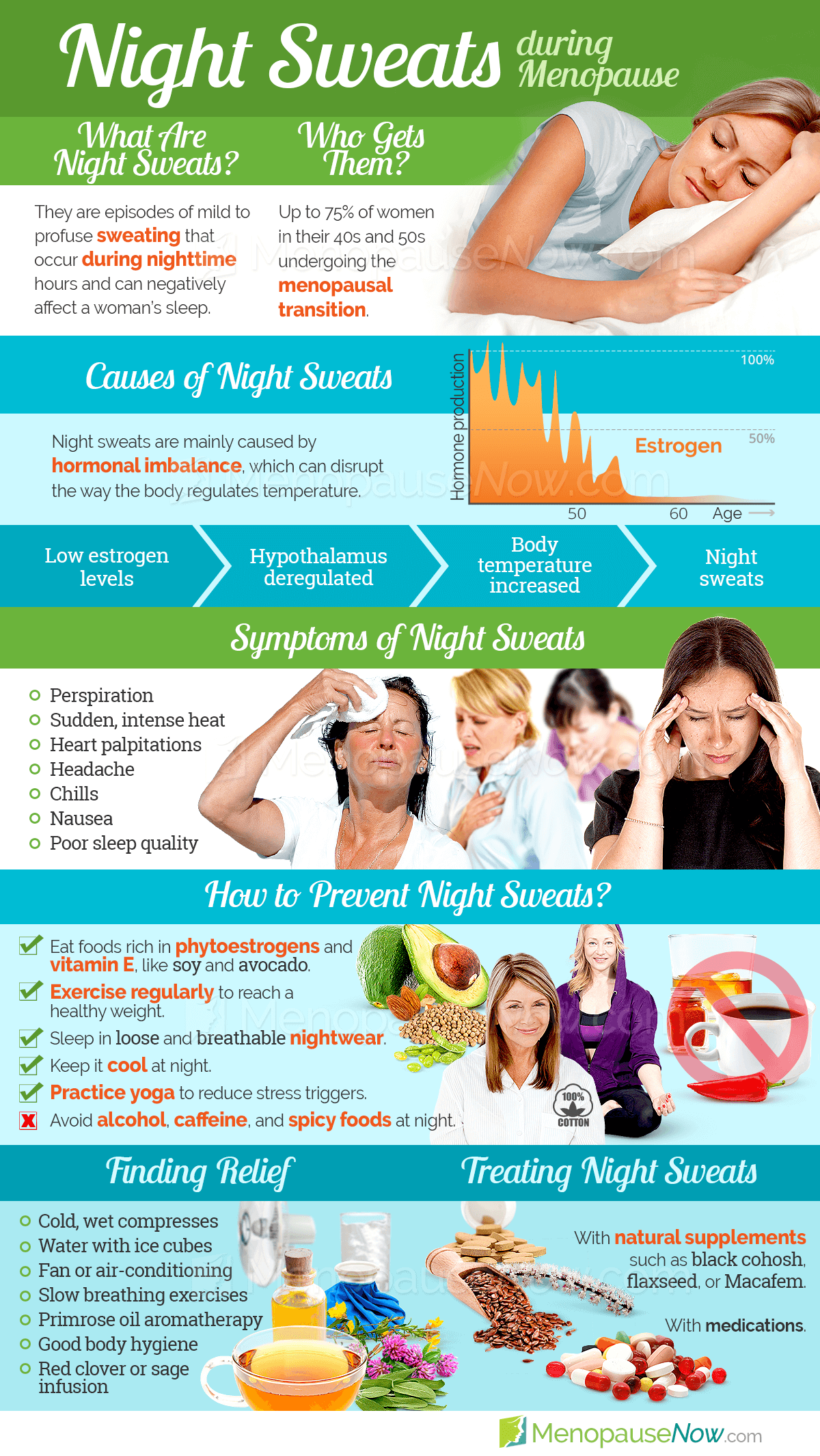
Night sweats, medically termed "sleep hyperhidrosis," are episodes of nighttime sweating, ranging from mild to profuse perspiration. Night sweats are similar to the hot flashes that can affect menopausal women during the waking hours.
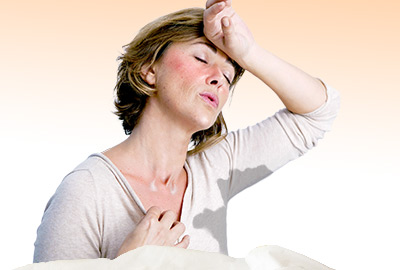
Oftentimes, night sweats can be so intense that they interrupt a woman's sleep, which can affect many aspects of her daily life. Common symptoms of night sweats include sudden and intense heat, irregular heartbeat, nausea, flushing, chills, and headaches.
Women with menopause-related night sweats may experience anywhere from mild to severe symptoms, varying in duration, during their usual sleeping hours.
Who Is affected?
Night Sweats and Sleep
The symptoms of night sweats can drastically disturb sleep patterns, making it difficult to get a good night's rest. Because of this, women who suffer from night sweats often experience:
- Insomnia
- Sleep disorders
- Trouble concentrating
- Exhaustion
- Irritability
- Heightened levels of stress
Many women in their 40s and 50s develop night sweats, often beginning before the cessation of the menstrual cycle. One study found that approximately 19% of women aged 40 - 55 who still had regular periods experienced night sweats. Most women begin to develop symptoms two to ten years before menopause occurs, during the span of time called perimenopause.
Many different factors contribute to how women experience menopause symptoms. Age, race, and other factors can influence how likely a woman is to develop night sweats during menopause.
Age
Age can affect a woman's experience of night sweats. One large study found that younger women are far more likely to experience night sweats. Another found that only 10% of patients older than 64 experienced night sweats.

Race
Studies have found that the prevalence of night sweats varies by race. One study found that three in four Caucasian women experience night sweats. Another found that African-American women were more likely to have night sweats than Caucasian or Hispanic women. Asian women were the least likely to report night sweats.

Click here to learn more about night sweats, or continue reading below to learn what causes night sweats.
Causes of Night Sweats
Many women who experience night sweats want to know the reason behind their symptoms. While the exact cause of night sweats is unknown, hormonal fluctuations are one of the primary factors in most menopause symptoms.
Hormonal causes
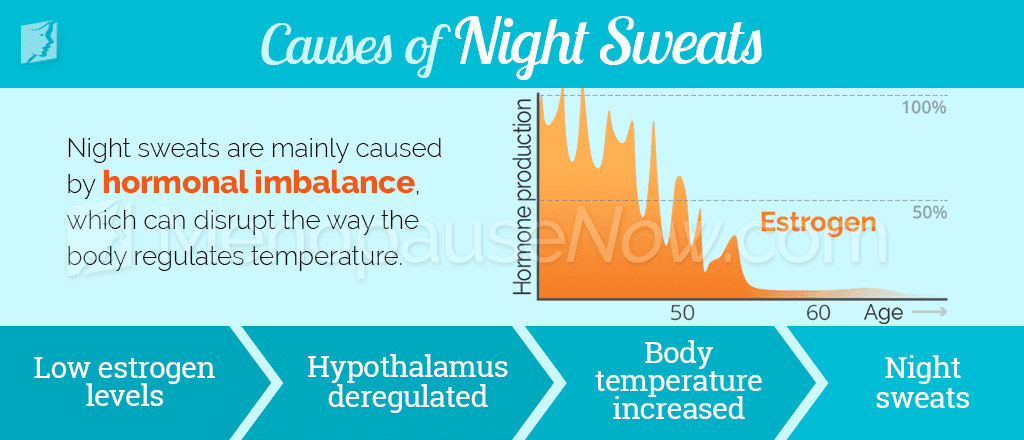
During menopause, estrogen production levels drastically decrease. This change affects the hypothalamus, the part of the brain responsible for the regulating body temperature. As a result, the hypothalamus often prompts a series of physiological reactions resulting in hot flashes or night sweats.
Other causes
While hormonal imbalance is the most common cause of menopausal night sweats, there are also rare medical causes, such as diabetes, anxiety, neurological conditions, sleep apnea, cancer, and thyroid disorder.
Night sweat triggers
Certain factors can increase the duration and severity of night sweats. Avoiding these triggers can help to alleviate both hot flashes and night sweats.
Environmental triggers
| Emotional triggers
| Behavioral triggers
|
Click here to find out more about the causes of night sweats, or continue reading below to learn more about treatments.
Night Sweats Treatments
Treating of night sweats often begins with lifestyle changes. This approach typically involves avoiding night sweats triggers and taking steps to relieve stress and improve diet and exercise. Tryptophan, for example, is an amino acid that helps aid in sleep and can be found in dairy products, nuts, and eggs. By incorporating more tryptophan in your diet, you can improve your overall quality of sleep.
While these lifestyle changes can help to relieve night sweats and improve sleep patterns, they do not treat the root cause of night sweats, which is hormonal imbalance.
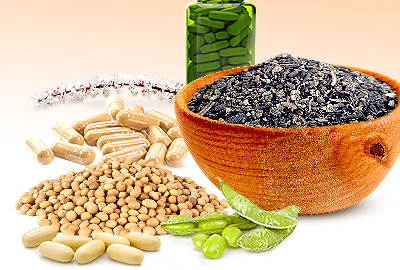
Fortunately, alternative medicine treatments can safely and effectively correct hormonal imbalances with little or no risk. In fact, many experts recommend combining lifestyle changes and alternative medicine for symptom management.
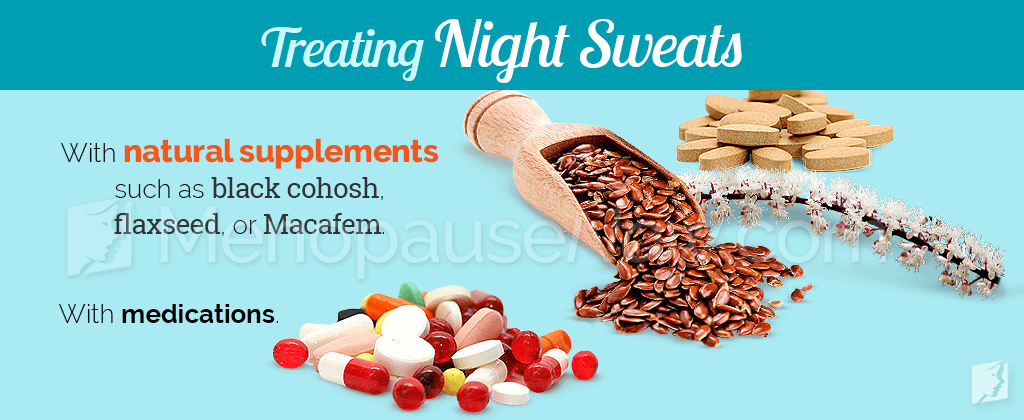
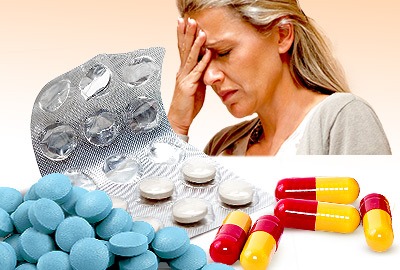
For some women, however, these changes are not enough to alleviate their symptoms. In such cases, they may want to consider prescription drugs or other clinical methods. Before beginning these treatments, however, it is recommended that women consult a trusted medical professional to better understand the potential benefits and risks of these prescription medications.
Most experts recommend that women begin with lifestyle changes and alternative medicines before trying prescription medications in order to alleviate their night sweats. The best treatment options, however, vary from woman to woman. Click on the following link to learn specific treatments for night sweats during menopause in these three categories.


Sources
- Boston Women's Health Collective. (2006). Hot Flashes, Night Sweats and Sleep Disturbances. Our Bodies, Ourselves.
- National Health Service UK. (2014). Menopause: five self-help tips. Retrieved April 7, 2016, from http://www.nhs.uk/Livewell/menopause/Pages/Menopauseselfhelp.aspx
- National Institute on Aging. (2015). Signs of the Menopausal Transition. Retrieved April 7, 2016, from https://www.nia.nih.gov/health/publication/menopause-time-change/signs-menopausal-transition