Menopause
During menopause, your body undergoes significant hormonal changes. Fluctuations in estrogen levels can influence your emotions and in some cases, mood swings can become a part of your day-to-day life. These menopausal mood swings can be stressful, upsetting, and difficult to deal with. However, there are easy and natural ways to combat your menopausal moods.
Vitamins to Control Your Mood Swings
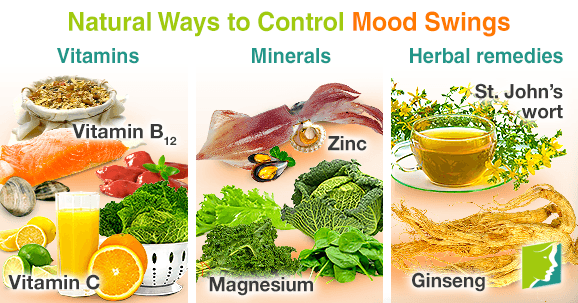
Certain vitamins has been recommended as a treatment for mood swings during menopause.Here are the facts that you should know about vitamins.
Vitamin D
Human's primary source of vitamin D is from the sunlight, which causes the body to create vitamin D. You can also get it from some fish and supplements. Vitamin D helps improve bone strength, regulate the immune system, and improves your mood.
Vitamin B5
Symptoms of B5 deficiency are fatigue, chronic stress, and depression. It's important to maintain vitamin B5 levels in your body. It is also important in hormone formation.
Vitamin C
Vitamin C acts as an antioxidant which supports the immune system and can improve emotional well-being. Oranges, kiwi fruit, and red peppers are particularly rich in vitamin C.
Vitamin B12
Vitamin B12 has the most significant impact on mood. Try to incorporate more B12 into your diet by consuming turkey, tuna, liver, and other meat in your diet.
Vitamin E
Vitamin E, found in nuts and nut oils, tomatoes, pumpkins, and mangoes, helps the body maintain a healthy nervous system, which in turn regulates your mental and emotional state.
Minerals for Mood Swings
Mineral has been recommended for mood swings during menopause.Here are the minerals.
Zinc
Zinc has a calming effect on the body and the brain. Oysters, egg yolk, whole grains, and split peas all contain zinc.
Magnesium
A deficiency in magnesium can contribute to depressions and mood disorders. Combat this by eating leafy greens, whole grains, and nuts.
Calcium
Calcium is one of the most vital minerals, and is crucial for a healthy and functioning body. It's found in milk and dairy products.
Potassium
Potassium can be obtained through eating cantaloupe, figs, shellfish, and cauliflower. Physical and mental stress can lead to a potassium deficiency, so it's important to consume enough potassium during menopause.
Herbal Remedies to Manage Your Mood Swings
When considering taking any of the following herbs, always look up the specific doses and side effects in advance. Some herbal medications react badly with other medications, or should not be taken by people with certain preexisting conditions.
Evening Primrose Oil
Available in capsule form, evening primrose oil provides essential fatty acids that can help improve both physical and emotional symptoms of menopause.
Ginseng
Ginseng not only has therapeutic qualities, but is a phytoestrogenic herb. When introduced to the body, ginseng mimics estrogen and can help replenish low levels of estrogen that lead to a hormonal imbalance.
St. John's Wort
St. John's Wort is used in Europe to treat premenstrual syndrome (PMS) and is also effective in combating menopausal mood swings.
Ultimately, mood swings are caused by a hormonal imbalance in the body. Hormonal fluctuations during menopause and pregnancy are the primary cause of mood swings.
Sources
- The Health Center.(n.d). "Adult Mood Swings".Retrieved September 18,2015, from www.thehealthcenter.info.
- Dr. Love, Susan, and Karen Lindsey. Dr. Susan Love's Menopause and Hormone Book. New York: Three Rivers Press, 2003.
- Amin, Zenab, Turhan Canli, and C. Neill Epperson. "Effects of Estrogen-Serotonin Interactions on Mood and Cognition". Behav Cogn Neurosci Rev 2005; 4; 43.
- Molecular Psychiatry.(n.d)."Estrogen Promotes Gender Difference in Brain's Response to Stress". Molecular Psychiatry. Retrieved September 18,2015, from www.psycheducation.org.