Menopause
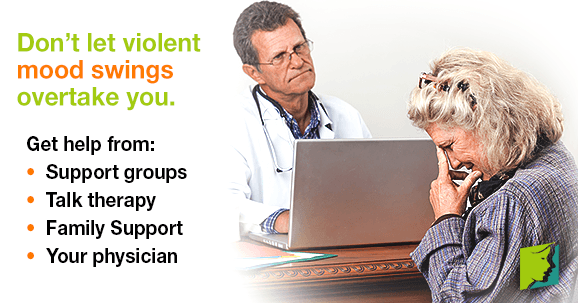
While menopause has a wide range of symptoms and can also cause mood swings and trigger behavioral changes, menopause is not an excuse for violence. If you have acted out in a violent or abusive manner toward a partner, loved one, co-worker, or anyone in your life, it is important that you take responsibility for your actions and seek medical assistance. Help can be found in the form of seeing a therapist or counselor, taking medication, or addressing what underlying issues you have that have made you act out violently.
If you have been a victim of violent feelings, it is important that you do not simply write it off to menopause symptoms or "mood swings". Women can be abusive, and it is important to leave situations that endanger your physical and emotional health. If a woman has lashed out violently toward another person, it is important to seek help.
What Forms Can Violence Take?
Although violence is often associated with men, women can also be the perpetrators of violence. It's true that men are responsible for the vast majority of violent crimes and abuse committed in the world, but that does not mean that women are incapable of being violent or that violence that they display should be written off as "mood swings."
Signs that a person has a violence or anger problem can include throwing things, such as cell phones or dishes; a raised voice or screaming; insults and put-downs; and physical aggression, such as physically preventing a person from leaving a room, shoving, pushing, slapping, kicking, and hitting.
What Causes a Person to Become Violent?
This is not an easy question to answer. However, it is not the victim's fault that a person is violent. Violent tendencies in a person can be due to brain chemistry, their history, and societal and cultural norms. However, people are responsible for their own actions, and excuses should not be made for their harmful behavior.
How Can I Talk to the People in My Life about the Violence I Am Experiencing?
One of the most important things you can do if you are part of a violent relationship is get help and talk to loved ones, such as friends and family, about what you are experiencing. Friends and family can offer you support, comfort, and love. However, talking about having or being on the receiving end of violent outbursts can be hard. If you want to have a conversation about this with a loved one, it is best to choose a place where you feel safe and have enough time to express yourself.
Treatments for Violent Behavior
If a person's anger has escalated to the point where they are physically violent, it is important to seek intervention immediately and get help. In serious cases, it is important to call the police. Other resources include support groups, therapy, and telephone hotlines. If you are a perpetrator of violence, it is important not to brush it off simply as a menopausal symptom or something that can easily be treated by menopausal treatments. Violence and anger problems have their own set of treatments, and you should pursue those with a healthcare professional.
Sources
- Dennerstein, l. & Soares, C. N. (2008). The unique challenges of managing depression in mid-life women. World Psychiatry, 7(3), 137-142.
- Mayo Clinic Staff. (2014). Domestic violence against men: Know the signs. Retrieved October 10, 2015, from http://www.mayoclinic.org/healthy-lifestyle/adult-health/in-depth/domestic-violence-against-men/art-20045149