Menopause
A little forgetfulness is a common trait in aging people in general. As a matter of fact, postmenopause and memory loss are closely related, as decreased estrogen levels can affect the brain's chemistry and cause memory lapses. However, make sure you don't confuse normal postmenopausal memory lapses with dementia. Read on to learn more about the difference between short-term lapses in recollection and long-term memory loss, or dementia.
Memory Lapses
Memory lapses actually begin in young adulthood. When you're in your 20s, brains cells slowly begin to die, and the brain very gradually slows production of compounds that aid in your thought processes.
These changes may make it more difficult for you to recall information as you grow older, which is usually nothing to worry about. Words lingering on the tip of your tongue and misplacing your car keys every now and then are usually normal signs of aging, along with:
- Shorter attention span
- Slowed thinking process
- The need for more stimuli to remember facts (photos, scents, phrases, etc.)
These symptoms happen to nearly everyone from time to time and are not cause for concern.
Memory Lapses during Postmenopause
It is common for postmenopausal women to suffer from occasional instances of memory loss since they are at a point in their lives of hormonal deficit.
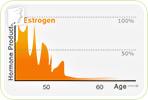
As briefly aforementioned, an estrogen deficiency can cause memory lapses since the hormone activates neurotransmitters responsible for recollection. Estrogen also constricts and dilates blood vessels, allowing for increased blood flow to the brain.
Dementia
Unlike normal memory lapses, dementia has a set of symptoms that impact long-term memory and severely interfere with your daily routine. The following symptoms may indicate dementia:
- Being constantly forgetful
- Repeating the same information many times during the course of a conversation
- Exhibiting differences in personality and behavior
- Inability to complete complex tasks
- Inability to make decisions
These symptoms may lead to the diagnosis of a specific condition, such as Alzheimer's disease or Lewy body disease. Other causes of dementia include Parkinson's disease, Huntington's disease, and multiple sclerosis.
Key Takeaways
All in all, most memory lapses are nothing to worry about and are a normal part of the aging process, especially in postmenopausal women whose brains are affected by estrogen deficiency. Having a shorter attention span, slower thinking process, and inability to remember facts without extra help are characteristic of age-related memory lapses. This can be managed by pursuing appropriate memory lapse treatments. However, being constantly forgetful, repetitive, and unable to complete difficult tasks or make decisions are all symptoms of more serious memory loss, dementia. If you or a loved one exhibit any of these signs of dementia, you should talk to a physician about diagnosis.
Sources
- Devi, G. et al. (2005). Prevalence of memory loss complaints and other symptoms associated with the menopause transition: a community survey. Gender Medicine, 2(4), 255-264. Retrieved October 19, 2018, from https://www.ncbi.nlm.nih.gov/pubmed/16464737
- Sliwinski, J.R. et al. (2014). Memory Decline in Peri- and Post-menopausal Women: The Potential of Mind-Body Medicine to Improve Cognitive Performance. Integrative Medicine Insights, 9, 17-23. doi: 10.4137/IMI.S15682
- State Government of Australia. (2014). Dementia - early signs. Retrieved October 19, 2018, from https://www.betterhealth.vic.gov.au/health/conditionsandtreatments/dementia-early-signs