Menopause

Libido problems are common in menopausal women as a result of an imbalance in hormone levels. Libido problems can have an adverse effect on a woman's relationships and her overall well-being. However, there are different actions women can take to have a sexual drive that they find fulfilling.
Why Do I Suffer from Female Libido Problems?
Many women suffer from loss of libido during menopause because of their changing hormone levels. Hormonal imbalances can cause problems with sex drive when estrogen and progesterone hormone levels drop. Lowering testosterone levels may also be responsible for drops in libido. However, testosterone tends to decrease slowly as women age, so it is not connected to menopause.
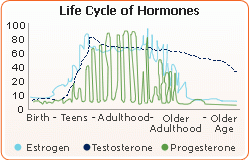
However, hormonal changes is not the only reason for changes in libido. For example, menopause can cause vaginal dryness, which can make sex uncomfortable or painful. This can cause a woman's libido to lower. Emotional problems, relationship problems, and increased stress and fatigue can also lower libido.
How Can Female Libido Problems Be Alleviated?
Female libido problems can be alleviated in a number of different ways, depending on what the causes are. It is also important to make sure that you are physically healthy, and this includes eating healthy and exercising regularly. It can also be helpful to use lubricant or a vaginal moisturizer to treat vaginal dryness. Ways to help psychological female libido problems:
See a therapist. Visiting with a partner is helpful if relationship problems may be causing a loss of sex drive.
Ensure you are getting plenty of sleep. Set aside time to and space to have sex.
Adopt a routine to de-stress. Find a way to focus on the body and mind, such as with yoga or meditation.
If your low libido is lowering the quality of your life it is a good idea to talk to a doctor. A doctor can rule out any underlying conditions that may cause low libido. A doctor can also prescribe medications and talk to you about lifestyle changes that may help to boost libido. Click to learn more about treating low libido.
Sources
- Mayo Clinic Staff. (2015). Low Sex Drive in Women. Retrieved November 25, 2015, from http://www.mayoclinic.org/diseases-conditions/low-sex-drive-in-women/basics/lifestyle-home-remedies/con-20033229
- National Health Service. (2015). Loss of Libido. Retrieved November 25, 2015, from http://www.nhs.uk/conditions/loss-of-libido/Pages/Introduction.aspx