 Menopause
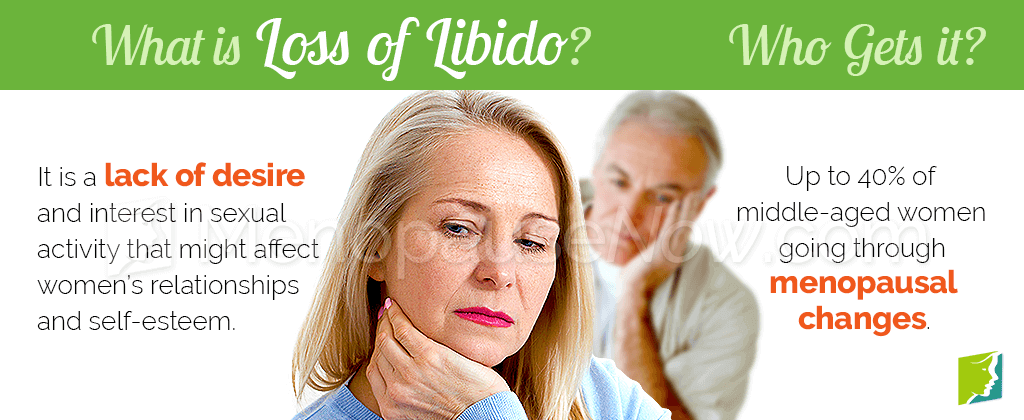
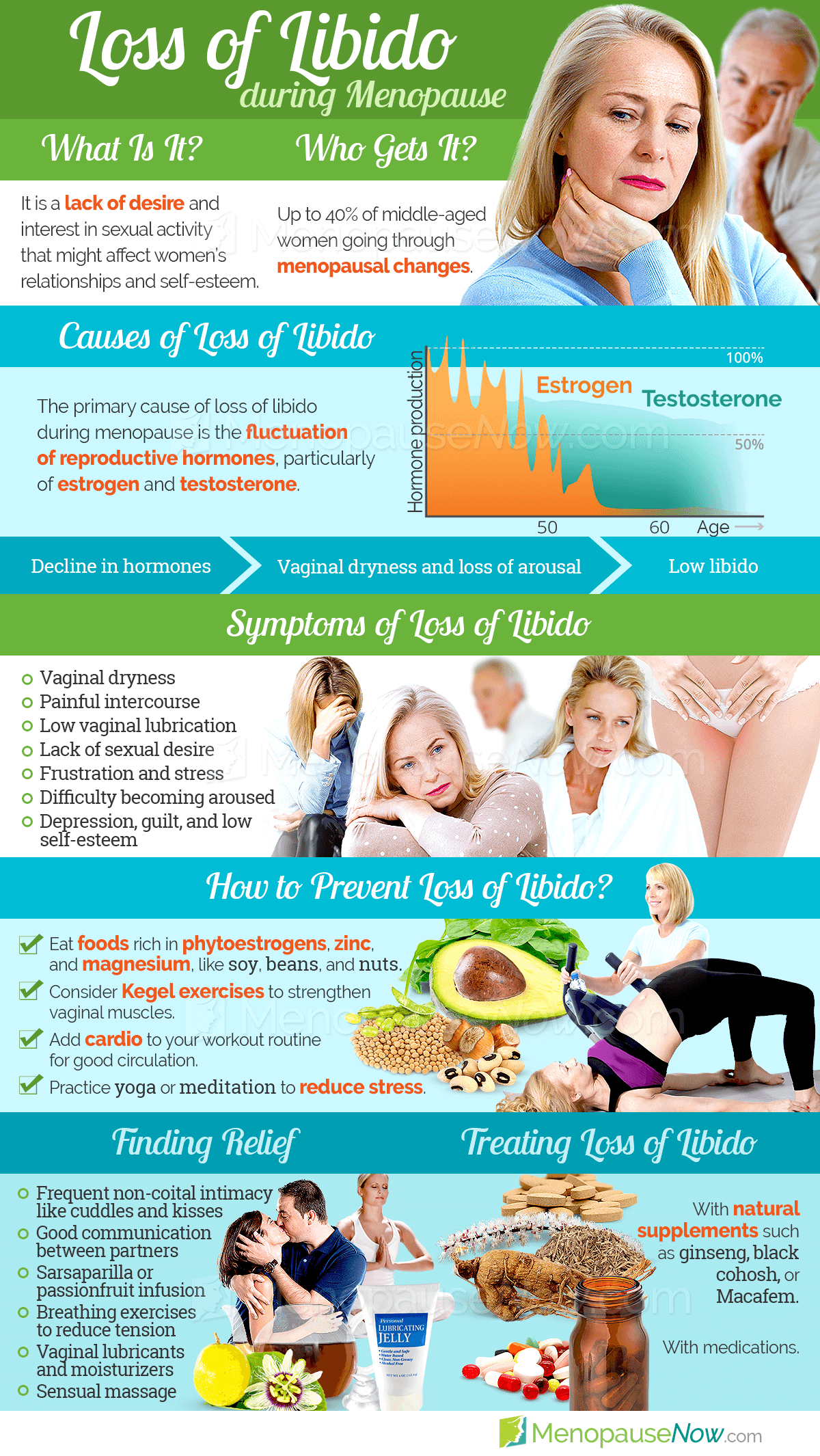
Loss of libido can be one of the most difficult symptoms of menopause to manage, often because a woman might not understand how and why she has lost the desire to be physically intimate with her partner. It is important to recognize that loss of libido during menopause is common, affecting as many as 20 - 40% of women.
Learning more about loss of libido, its various causes, and how it can be managed can not only bring peace of mind, but it's also the first step towards resolving this complex symptom of menopause.
Read on to learn more about loss of libido during menopause.
About Loss of Libido
Loss of libido is a complex phenomenon with psychological, relational, physical, and hormonal dimensions as unique as the women who experience them.
The term libido has long been used to describe a person's sexual drive and their desire for sex. Loss of libido, medically termed "hypoactive sexual desire disorder," is a reduction or lack of interest and desire in sexual activity.
Loss of libido is chiefly characterized by a lack of interest or desire for sexual activity. Many women with loss of libido find that they are less in touch with their sexuality. Sexual feelings and desires come less frequently, and energy for sex drastically dwindles or disappears from a woman's life.
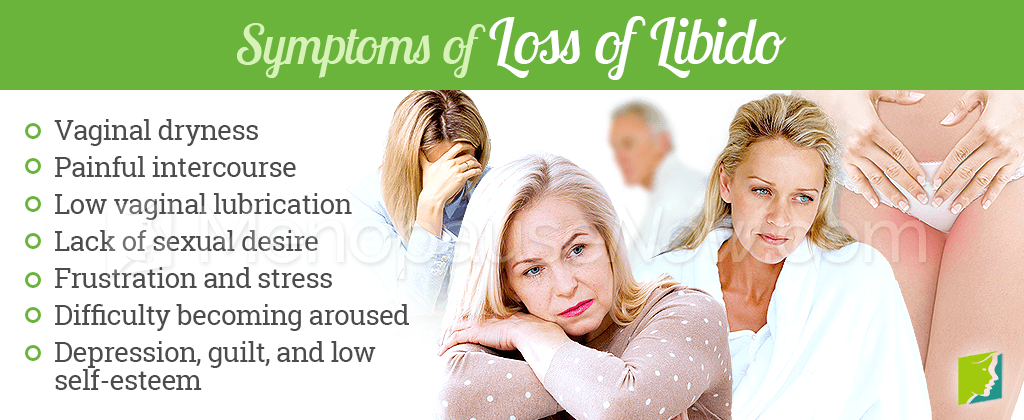
While loss of libido differs from the inability to become aroused or achieve orgasm, menopausal women may also experience these symptoms of sexual dysfunction. Other symptoms of menopause, such as vaginal dryness and irritation, can also be related to the symptoms of a loss of libido.
Click on the following link to learn more about loss of libido, or continue reading below to find out what can cause loss of libido during menopause in order to find a solution.


Causes of Loss of Libido
Like many menopause symptoms, hormone imbalance is the primary factor behind loss of libido. However, physical, psychological, and relationship issues decrease sex drive during menopause as well.
Hormonal causes of loss of libido
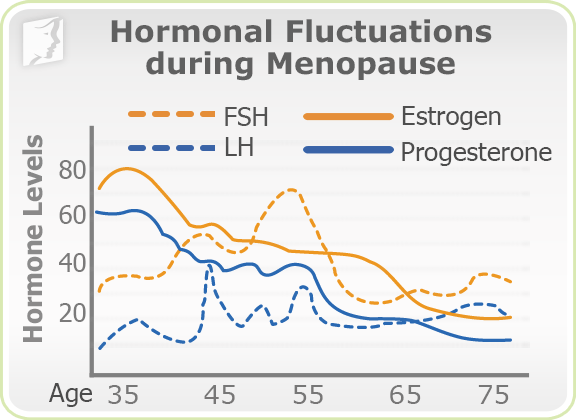
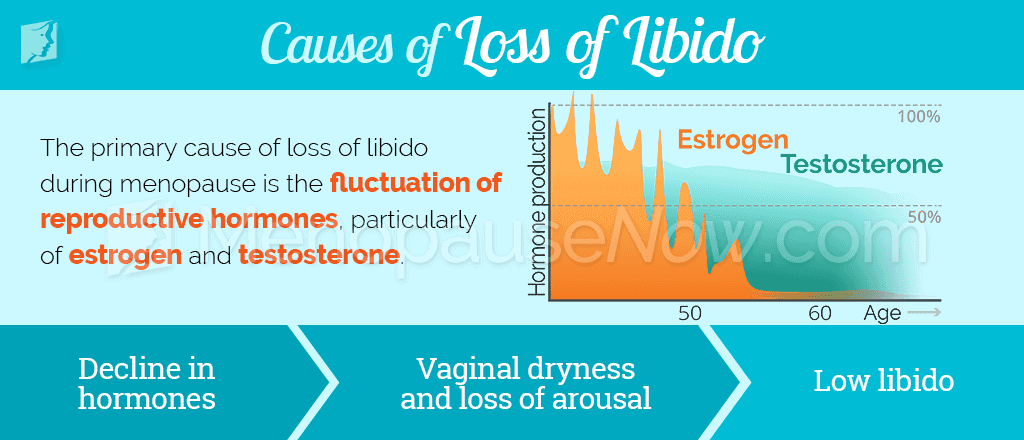
During menopause, one of the most common identifiable causes of loss of libido is hormonal imbalance. A decrease in estrogen, progesterone and testosterone production can negatively impact a woman's desire for sex.
Estrogen
Estrogen plays a vital role in female sexuality by increasing sensations, assisting in the production of vaginal lubrication, and maintaining the health of vaginal tissue.
As a woman approaches menopause, her body begins to produce less estrogen. This can cause many symptoms contributing to loss of libido, such as hot flashes, night sweats, irregular periods, and vaginal dryness.
Progesterone
The hormone progesterone is also integral to maintaining sexual health. When levels become too low during menopause, the resulting irregular periods, fatigue, and other menopause symptoms can cause loss of libido.
Testosterone
As with estrogen, the body begins to produce lower levels of testosterone with age. Experts believe that this drop in testosterone can also cause women to experience loss of libido around the time of menopause.
While hormonal changes are often a major cause of loss of libido during menopause, other factors can also contribute to the symptom. Read on to learn about these other potential causes.
Other causes of loss of libido

In addition to hormonal causes of loss of libido, several other factors can lead to this common menopause symptom.
The other causes can be separated into three categories: physical, psychological, and relational causes. These other causes are listed below.
Physical Causes
- Sexual dysfunction
- Pain-related conditions
- Medication use
- Hysterectomy
- Diabetes
- Heart disease
- Anemia
- Chronic disease
- Vaginal dryness
Psychological Causes
- Stress
- Fatigue
- Changes in self-esteem and body image
- Concerns about aging
- Feelings about sex
- Psychological conditions (e.g., depression and anxiety)
Relational Causes
- Changes in partner's physical health
- Intimate relationship changes
- Availability of partner
- Lack of communication between partners
- Changing social role
- Family changes
- Low sex drive in partner
- Major life changes
Loss of libido is a complex symptom of menopause with many potential causes. Click on the following link to learn more about the causes of loss of libido during menopause, or continue reading below to find out the panoply of treatment options available for loss of libido.



Loss of Libido Treatments
Fortunately, loss of libido can easily be treated through a variety of methods. Often, lifestyle changes such as a healthy diet and physical activity will not only help to treat loss of libido, but stress and anxiety as well.
Recommended foods
- Oysters, red meat, liver, kidney beans (zinc)
- Leafy greens, almonds, buckwheat (magnesium)
- Lean meats, fish, nuts, dairy (protein)
- Edamame, tofu, miso, soy milk (soy products for phytoestrogen)
Recommended exercises
- Yoga (increased flexibility, relaxation)
- Kegel exercises (strengthens vaginal muscles)
- Aerobics (heart health, circulation)
- Stretching (relaxation, stress relief, improved muscle tone)
However, because the root of the problem for women going through menopause is a drop in hormone levels, the best way to treat this problem is to go directly to the hormonal source. Natural supplements are an excellent and safe way to achieve this.

In more extreme cases, there are medical solutions like pharmaceutical options available, though due to risk of side effects or other complications, this should be considered as the last resort.
Click on the following link to learn specific treatments for loss of libido, which begin with lifestyle changes, move onto alternative medicines, and finally, if those options don't seem to help, prescription medication. The most effective treatments for loss of libido typically combine lifestyle changes and alternative medicines.




Sources
- National Health Service UK. (2014). Sex after the menopause. Retrieved April 8, 2016, from http://www.nhs.uk/Livewell/women4060/Pages/sex-after-the-menopause.aspx
- Office on Women's Health. (2010). Menopause and sexuality. Retrieved April 8, 2016, from http://womenshealth.gov/menopause/menopause-sexuality/
- Sarell, P. (1999). Psychosexual effects of menopause: Role of androgens. American Journal of Obstetrics & Gynecology, 180, 3S-II.
- Woods, N.F. , Mitchell, E.S. & Smith-Di Julio, K. (2010). Sexual Desire During the Menopausal Transition and Early Postmenopause: Observations from the Seattle Midlife Women's Health Study. Journal of Women's Health, 19(2), 209-218. doi: 10.1089/jwh.2009.1388