Menopause
Irregular periods are a common indication that a woman is approaching menopause. They are often considered as being one of the first recognizable menopause symptoms. Despite the fact the every woman's menstrual cycle is different, almost all women will experience irregular menstrual periods for three to ten years before they reach menopause.
As menopause approaches, hormonal imbalances disrupt the menstrual cycle, and often result in irregular periods. In fact, only 10% of women reach menopause without experiencing irregular menstrual periods. Keep reading to find out more about irregular menstrual cycles.
What Is a Regular Period?
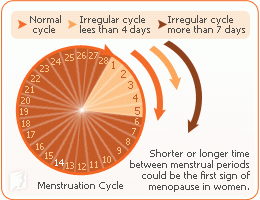
In order to understand irregular menstrual periods, it is necessary to define regular periods. Every woman's menstrual cycle is different, but generally speaking, a “normal” period is 3 to 5 days of menstruation, with each cycle lasting between 21 and 35 days. A woman will be able to judge whether or not she is experiencing irregular menstrual periods depending on whether they differ from her normal menstrual pattern and symptoms.
Irregular menstrual periods are defined as alterations in a woman's typical menstrual cycle that continue for several months. Alterations can include abnormal bleeding or unusual cycle lengths.
What Do Irregular Periods Mean?
Irregular menstrual periods are a common indication of menopause. As a woman approaches this transitional phase, hormonal imbalance will increase until menstruation ceases. Estrogen and progesterone hormones are the main contributors to the menstrual cycle. Therefore, when their levels decrease one of the results can be irregular periods.

Perimenopause, is the stage before actual menopause, and is the time when most women first notice irregular menstrual periods. The menstrual cycle can change dramatically during perimenopause. A woman may experience longer or shorter cycles, lighter or heavier bleeding or even missed periods.
When Do Irregular Menstrual Periods Begin?
Typically, irregular menstrual periods start when women are in their late forties. However, some experience them as early as their mid-30's, and others, as late as their mid-50's. Symptoms of irregular menstrual periods vary from women to women, but it is expected that women will experience irregular periods as they transition through menopause.
What Are the Common Symptoms of Irregular Periods?
Common symptoms of irregular menstrual periods include:

- Spotting
- Missed periods
- Infrequent or too frequent periods
- Painful cramping
- Extended bleeding
- Changes in blood flow
- Blood clots
If you experience any of the symptoms below, it is recommended that you contact your doctor, because some of the following symptoms can indicate other health conditions.
- Heavy bleeding
- Bleeding after sex
- Abdominal pain
- Any odorous discharge
Sources
- Hutchinson, Susan M.D. "The Stages of a Woman's Life: Menstruation, Pregnancy, Nursing, Perimenopause, Menopause". November 2007.
- Love, Susan M.D. Menopause and Hormone Book. New York: Three Rivers Press, 2003.
- BMJ Group. "Menopause: What is it?" Patient Leaflet. 2007