Menopause
When a woman reaches perimenopause, she often begins to experience irregular menstruation. These irregularities can include changes in the quantity of bleeding, and heavy bleeding may cause tampons or sanitary pads to be soaked through in under an hour.
Read on to find out more about irregular periods and heavy bleeding during perimenopause, including causes and treatment for improved reproductive health.
What Causes Irregular Periods and Heavy Bleeding?
In short, women commonly suffer from irregular periods during perimenopause. Research has found that about 85 percent of women experience changes in their menstrual cycles before the final menstrual period.1
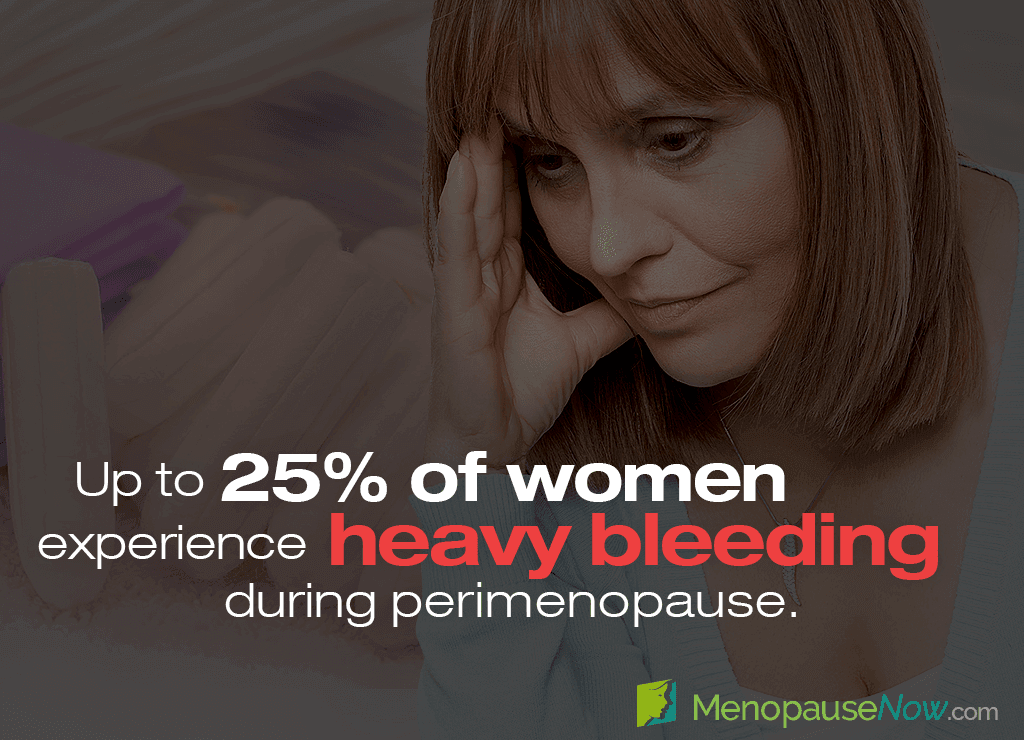
Although it is possible to experience heavy bleeding due to perimenopause, it is much less common than irregular periods as only 25 percent of women report it.2
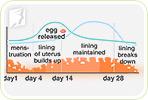
Throughout a woman's reproductive life, estrogen and progesterone take the front line in reproductive system operations.
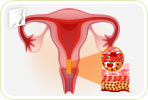
As a woman's eggs begin to run out approaching menopause, both hormones are thrown out of balance since ovarian eggs are their main produces. As such, drastic fluctuations occur, which can cause irregular periods and heavy bleeding from a greater buildup of the uterine lining.
When Should I Be Concerned?
When first encountering abnormalities, it is crucial to consult a doctor to rule out other possible causes as persistent heavy bleeding can cause women to become anemic from blood loss.
Irregular periods and heavy bleeding can also be due to a number of endocrine conditions, such as polycystic ovary syndrome (PCOS), endometriosis, or fibroids.
Regardless of the quantity of flow, bleeding is considered abnormal if it happens after sex and there is spotting between periods as well as shorter intervals between periods (less than three weeks). Can I
Can I Prevent Irregular or Heavy Bleeding?
It is important to keep in mind that these menstrual abnormalities are a natural part of women's lives.
Nevertheless, there is a number of ways to lessen the symptoms of the menopausal transition, including:
Natural methods
The first resort to treating a heavy menstrual flow can be natural remedies, such as taking vitamin B12 as well as folic acid and vitamin C, which all can help build red blood cells.
Herbs like black cohosh can also be used to treat heavy bleeding and other menopause symptoms, such as hot flashes and anxiety.
Birth control pills
Birth control for perimenopause is often used to regulate periods and alleviate menopause symptoms at the same time, but some contraception can actually produce heavy bleeding.
Because research on the long-term effects of birth control is inconclusive, many women turn to more natural measures to treat heavy bleeding.
Click on the following link for more information about the available treatments for irregular periods during menopause for a hormonally balanced you.
Sources
- The American College of Obstetricians and Gynecologists. (2018). Perimenopausal Bleeding and Bleeding After Menopause. Retrieved November 13, 2019, from https://www.acog.org/Patients/FAQs/Perimenopausal-Bleeding-and-Bleeding-After-Menopause
- Mayo Clinic. (2019). Heavy periods: Can folic acid help? Retrieved November 13, 2019, from https://www.mayoclinic.org/diseases-conditions/menorrhagia/expert-answers/heavy-periods/faq-20058365
- Penn Medicine. (2016). When Should You See a Doctor for Irregular Periods? Retrieved November 13, 2019, from https://www.pennmedicine.org/updates/blogs/womens-health/2015/april/when-should-you-see-a-doctor-for-irregular-periods
Footnotes:
- Harlow, S.D. & Paramsothy, P. (2011). Menstruation and the Menopause Transition. Obstetrics and Gynecology Clinics of North America, 38(3), 595-607. doi: 10.1016/j.ogc.2011.05.010
- Our Bodies Ourselves. (2011). What to Expect in Perimenopause. Retrieved November 15, 2019, from https://www.ourbodiesourselves.org/book-excerpts/health-article/what-to-expect-perimenopause/