Menopause
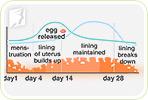
Many women experience irregular periods as they transition through menopause. Irregular periods are often a normal part of the menopausal process, and happen because women's bodies slowly produce fewer sex hormones as they begin to shut down reproductive capability. While the menstrual cycle cannot be completely controlled, there are some steps that can be taken to better handle irregular periods and other menopause symptoms.

Talk it Out
Irregular periods can be one of the first signs of menopause. Like any other life transition, going through menopause can be overwhelming, and even more so if you don't know what to expect. Talking about what you are experiencing with a woman in your life that you trust and listening to her experiences can help you. It can make you feel more confident and comfortable about what you and your body are going through.
See a Doctor
Menopause does not need to be diagnosed, and usually irregular periods are not a problem, but if you have other symptoms and your irregular periods are painful, it is a good idea to talk to a doctor. Doctors can look for cysts, fibroids, or anemia - all of which can cause irregular periods.
Hormonal Contraception
Hormonal contraception like birth control pills and the patch contain estrogen and progesterone. These hormones control your menstrual cycle and the release of eggs so that you are unable to get pregnant. They also regulate when and if you get your period. Talk to your doctor about what forms, doses, and combination of hormones are right for you.
Exercise
Daily exercise can help alleviate stress, which can cause irregular periods. Try running, kickboxing, yoga, taking a tennis class, or any other activity that sounds like fun to you.
Lifestyle Changes
A poor diet and high stress levels can cause irregular periods. Make sure you are getting the right amount of vitamins and other nutrients. If your periods are irregularly heavy it is important you are getting enough iron, which is a necessary mineral for healthy blood that can transport oxygen throughout the body.
Research
Reading about menopause and irregular periods on trusted websites such as Mayo Clinic and the National Institutes of Health can help you better understand what your body is going through. Checking out books on women's health and menopause at your local library can also help you feel better equipped.
Irregular periods are a symptom of menopause. However, it is important to see a doctor if you are menopausal and have gone six or more months without a period and then experience spotting or bleeding. This could be a sign of something serious like ovarian cancer. It is also important to see a doctor if you have irregular periods along with other symptoms such as pain or fatigue that are lowering your quality of life. Hopefully, the tips listed above and any medical treatment you seek out will help you as you transition through menopause.
Sources
- Hutchinson, Susan M.D. "The Stages of a Woman's Life: Menstruation, Pregnancy, Nursing, Perimenopause, Menopause". November 2007.
- Love, Susan M.D. Menopause and Hormone Book. New York: Three Rivers Press, 2003.
- National Health Service. (2015). Your Contraception Guide. Retrieved from http://www.nhs.uk/Conditions/contraception-guide/Pages/contraception.aspx
- Office on Women's Health. (2014). Menstruation and the menstrual cycle fact sheet. Retrieved from http://www.womenshealth.gov/publications/our-publications/fact-sheet/menstruation.html