Menopause
Menopause has ended, and many women think related symptoms are a thing of the past. However, just as during perimenopause and menopause, a woman's body continues to shift during postmenopause, and certain aspects - like the body's temperature gauge - are still at risk of malfunction. Other unfortunate symptoms - such as night sweats, vaginal dryness, mood swings, and fatigue - are the most common menopausal symptoms to affect postmenopausal women. It is important for women to be aware so they can best manage what is yet to come.
How to Recognize Postmenopausal Hot Flashes
Common symptoms of hot flashes are, by and large, the same as those you see during menopause. Symptoms include flushing, change in heartbeat (namely rapid and sudden), chills, sweating, and an intense heat in the body. Most women will suffer loss of sleep, too, which can disrupt daily life.
Understanding Why They Happen
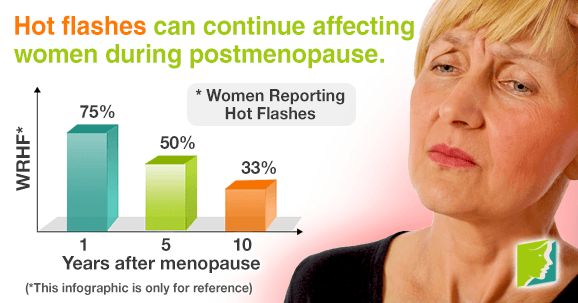
Hot flashes tend to taper off following menopause; however, some women struggle with them for the rest of their life. There is no single definition that can describe why you have hot flashes postmenopause. Hormone levels have usually evened out, so this often means that your lifestyle could be playing a part. Avoid spicy food, caffeine, and alcohol to help prevent hot flashes.
The Duration
While hot flashes are generally out of a woman's control, there are also lifestyle changes one can be aware of in order to lessen the severity and duration of each episode, and even possibly reduce the likeliness that they will occur. For example, stress and anxiety play a big part in hormonal balance, and consequentially can cause body temperature to rise. Hot flashes will vary from woman to woman, and some may need to seek medical advice for treatment if they prove to be relentless.
The Solution
For mild to moderate cases, lifestyle changes may be enough. Postmenopausal women should seek out an active physical routine to build stamina and endurance that will not only improve mental well-being, but also build a higher tolerance for hot flashes. For severe cases, estrogen therapy is worth looking into. Always check with your doctor if you have any immediate concerns, but adding fruits and vegetables to your diet, exercising, and reducing stress should go a long way in dealing with any problems.
More Information
Postmenopausal woman can reduce a variety of potential health problems by limiting - if not completely cutting out - their intake of caffeine, alcohol, and tobacco. Herbal supplements are known to help balance hormone levels, and can be of great assistance to women. Follow this link to know more about postmenopausal hot flashes treatments.
Sources
- Freeman EW1, Sammel MD, and Sanders RJ. (2014). Menopause. Risk of long-term hot flashes after natural menopause: evidence from the Penn Ovarian Aging Study cohort. Retrieved from www.ncbi.nlm.nih.gov/pubmed/24473530
- An International Journal of Obstetrics and Gynaecology. (2011). Older women still suffer from hot flushes and night sweats years after the menopause. Retrieved from http://www.bjog.org/details/news/1375983/Older_women_still_suffer_from_hot_flushes_and_night_sweats_years_after_the_menop.html