Menopause
A hysterectomy is a surgery that removes the uterus and can also remove other parts of the reproductive system. Some hysterectomies also include the removal of the ovaries. If this is the case, a woman's reproductive abilities end and menopause is induced. A hysterectomy is a major procedure that can require months to recover. However, some menopause symptoms can last longer than this. The most common menopausal symptom is hot flashes.
By understanding hot flashes, why they occur, and how to deal with them, and what types of treatment to seek, women will be able to manage their symptoms more effectively.
What Are Hot Flashes?
Hysterectomy can often trigger the onset of menopausal symptoms such as hot flashes. Hot flashes are sensations of intense heat in the upper body, and are usually accompanied by a rapid heart rate, a reddening of the chest, neck, and face and sometimes intense perspiration. When hot flashes occur at night they are often referred to as night sweats.
The duration of hot flashes is different for every woman, but a typical episode lasts between thirty seconds and five minutes. After a hysterectomy, women will experience variations in the intensity and frequency of hot flashes.
What Causes Hot Flashes After a Hysterectomy?
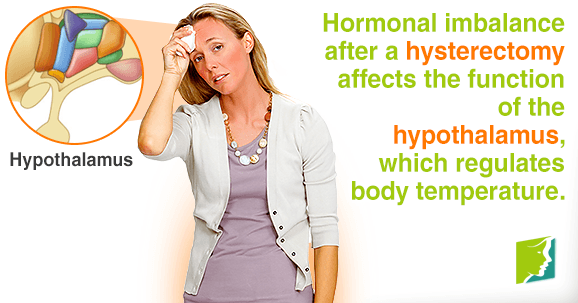
Declines and fluctuations in the level of the hormone estrogen after a hysterectomy affects the function of the body, especially the hypothalamus - the part of the brain that regulates body temperature.
Falling estrogen levels caused by a hysterectomy can cause the hypothalamus to falsely detect an increased body temperature and release chemicals that make skin blood vessels dilate so that heat can be released and the body cooled down. This results in a hot flash.
Hot flashes and other menopausal symptoms usually subside when a woman is postmenopausal. Experiencing menopause that is induced by a hysterectomy can be a little different than natural menopause.
This is because when a woman naturally goes through menopause her body has more time to adjust as the levels of hormones in her body decrease. With a hysterectomy, the ovaries are removed, which is where estrogen is produced. This means there is a rapid cutoff of estrogen production which can result in more severe menopausal symptoms.
How Can I Manage Hot Flashes After a Hysterectomy?
Most doctors recommend a healthy diet, regular exercise, lifestyle changes, and alternative medicine to manage hot flashes. If you are seeking medicinal treatment, talk to your doctor to find a treatment that is right for you.
Sources
- National Health Service. (2014). Hysterectomy. Retrieved from http://www.nhs.uk/conditions/hysterectomy/Pages/Introduction.aspx
- Office on Women's Health. (2014). Hysterectomy. Retrieved from http://www.womenshealth.gov/publications/our-publications/fact-sheet/hysterectomy.html