Menopause
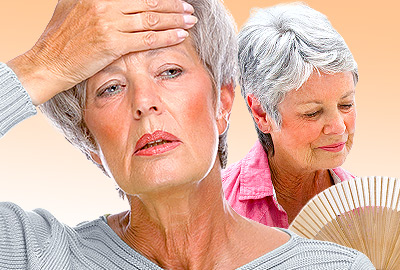
Hot flashes are the most commonly reported symptom of menopause, and can last for years in some woman. Anxiety can impact how often and how severe a woman's hot flashes are.
Research shows that women who experience a moderate amount of stress in their life experience more hot flashes as women who don't. Along with stress, anxiety disorders, depression, and other psychological conditions can also increase the frequency and intensity of hot flashes.
What Does Anxiety Have to Do with Hot Flashes?
Studies have shown that women with a narrow thermo-neutral zone, that is the core temperature range the body maintains without sweating or shivering, experience more hot flashes than women with a wider zone.
The chemical norepinephrine is known to shorten the zone. Norepinephrine has been found in animals when they experience stress and anxiety, and the same is thought to be true of humans as well. This may be one reason people under a lot of stress or people suffering from anxiety, may experience more hot flashes.
Symptoms of Anxiety
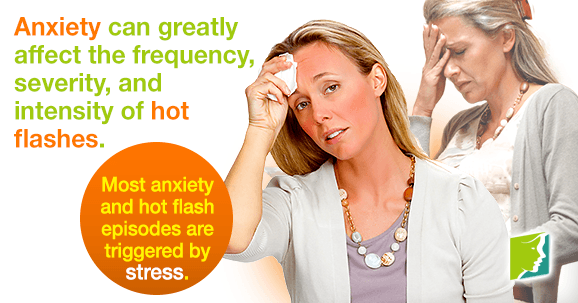
Anxiety can greatly affect the frequency, severity, and intensity of hot flashes and also can have a negative impact on many different areas of our lives. People with anxiety conditions may experience:
- Feeling restless or on edge
- Feeling irritable
- Difficulty concentrating and relaxing
- Increased heart palpitations
- Tense muscles and body aches
- Trembling
- Diarrhea
- Headaches
- Upset stomach
What to Do About Anxiety and Hot Flashes?
Steps you can take to treat anxiety and handle stress include:
Use relaxation techniques. Meditation, yoga, taking a hot bath, or going for a walk or run can relieve stress.
Practice deep abdominal breathing. Taking deep breaths and hold them in for a count of eight will decrease your heart rate.
Manage stress. Stress can be caused by everything from a looming deadline at work, to family problems, to financial issues. You cannot always solve these problems or make them go away, but you can deal with them head on and minimize the negative impact they have on your life.
Live healthily. Exercising and eating healthy will help you both physically and mentally. Also staying away from alcohol, cigarettes, and processed food will also help you feel better. You do not have to go on a diet or do anything that punishes your body, but taking little steps to eat healthy will improve your overall well-being.
Have a healthy level of self-esteem. Everyone has negative thoughts once in a while, but if you have them to the point where they are overwhelming, it is important to address this. Talking to a therapist or taking other steps to think more positively can help.
Treating Anxiety and Hot Flashes
If you think you have an anxiety condition, you should talk to your doctor, who will be able to help you find a treatment plan that works for you. For more information on treating anxiety, click here
Sources
- National Health Service. (2014). Generalised anxiety disorder in adults - Symptoms. Retrieved from http://www.nhs.uk/Conditions/Anxiety/Pages/Symptoms.aspx
- Freeman E.W., Sammel M.D., Lin H., Gracia C.R., Kapoor S., & Ferdousi T. (2005). The role of anxiety and hormonal changes in menopausal hot flashes. [Abstract]. Menopause, 12(3), 258-266.