Menopause
Headaches are irritating at the best of times, but when they occur during menopause - along with a myriad of other symptoms - they can be even more difficult to manage. During menopause, some women will experience significant increases in headache frequency and severity. They can affect women in many different ways, but fortunately there are ways to manage them. There are reasons behind menopausal headaches, with numerous treatment options to help ease this symptom. Read on further to have your questions about headaches during menopause answered.
What Types of Headache Could I Experience in Menopause?
Headaches will vary in duration and severity for every woman, and migraines unfortunately are likely to occur during menopause. Migraine characteristics may include throbbing or pulsating pain in the head, increased sensitivity to light and sound, pain lasting for up to 24 hours or longer in some cases, and a pain that starts in one area and spreads to another.
Migraines may cause vomiting, along with sweaty hands and feet in conjunction with fatigue or mood swings. Nausea-induced migraines are most common. Some women may also experience a migraine with 'aura', which means that before the pain arrives she will visualize bright lights around the edges of her field of vision: an often scary effect of this menopause symptom.
Tension headaches are the most common type, which produce a mild to moderate pain throughout the head. Some women may experience sinus headaches, which cause blocking and inflammation of sinuses as well as throbbing forehead pain.
Why Might I Experience More Headaches in Menopause?
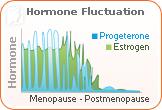
It is the imbalance of estrogen and progesterone that causes women to suffer from headaches more frequently in menopause. Research about why hormone fluctuation causes headaches is inconclusive but most researchers agree that it is because these two hormones are connected to the brain and its blood vessels. When hormone levels rise and fall, the blood vessels are forced to expand and contract, which triggers pain.
What Triggers Headaches?

Certain factors will produce headaches or worsen them, increasing pain or frequency. If you suffer with headaches frequently then it may be helpful to avoid certain possible triggers for a while, to determine if these are aggravating the problem. These include excessive amounts of alcohol or caffeine (although a quick withdrawal from these might also trigger headaches), a lack of sleep or too much, skipping meals or fasting, bright lights, loud noises or strong odors, and any emotional disorder like stress or anxiety.
It is also advisable that you avoid or cut down on foods that contain high amounts of nitrates (e,g.,hot dogs, lunch meats) and Tyramine (e,g., aged cheese, soy products, smoked fish, and beans).
What Can I Do to Relieve My Headache Pain?

Trying to rebalance your hormones is essential for managing headaches. Ensure you get at least 30 minutes of exercise a day. This, along with a well-balanced diet and a de-stressing activity such as yoga or meditation, will help to balance your estrogen and progesterone levels and make you feel happier and healthier.
Acupuncture is an alternative treatment that may be an effective option for some women as an alternative to pharmaceutical drugs. If not, there are a variety of other treatment methods which are available. See your doctor if you require more advice about the medication available.
Recommendation
If your headaches persist and get progressively worse, it is important that you see a doctor to discuss your symptoms fully. Furthermore, if you start to experience headaches that wake you from your sleep or cause confusion, dizziness, weakness or a high fever then you should also go to the doctor. Headaches in menopause can be treated and should only be a temporary problem. As an initial course of action you should try to make lifestyle changes before opting for a riskier option.
Sources
- Dr. Lichten, Edward.(n.d). "Menopausal migraine: The Role of Hormonal Replacement." The Menopausal Syndrome. Scottsdale, Arizona January 27, 1990. Reid-Rowell, Inc. Pages 21-24
- Mayo Clinic.(n.d). "Migraines." Retrieved from www.mayoclinic.com.
- U.S. Department of Health and Human Services.(n.d)."Migraines". U.S. Department of Health and Human Services. Retrieved from www.womenshealth.gov.