Menopause
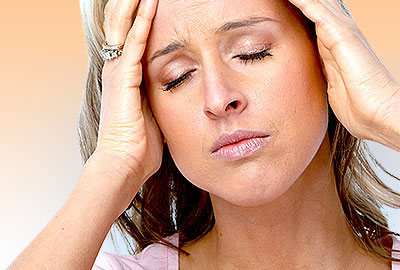
A common symptom of menopause is increased severity and frequency of headaches and often debilitating migraines. Migraine headaches are generally experienced as a recurrent, throbbing pain usually felt on one side of the head. Migraines usually begin in early childhood, adolescence or young adult life. However, they are also extremely common during menopause. Read over the following paragraphs for more information on menopause and migraine headaches.
What Causes Migraine Headaches?
Migraines are caused by a rapid widening and narrowing of blood vessel walls in the brain and head. This, in turn, causes the pain fibers in the blood vessel wall to become irritated often involving the blood vessels in the scalp. The following may also act as triggers for migraine attacks:
- Hunger
- Changes in weather
- Fatigue
- Avocados, nuts, cheese, and chocolate
- Oral contraceptives
- Menstrual periods
- Menopause
- Foods cured with nitrates (e,g., hot dogs)
- Emotional stress
- Meat tenderizers
- Alcoholic beverages
What Are the Common Symptoms of Migraine Headaches?
There are many forms of migraine headaches. The classic migraine and the common migraine are the two main types and can be experienced both during and outside of menopause.
Typical Migraine Symptoms
- Eyesight may suddenly change
- Bright spots or zigzag lines may be seen and some women experience double vision.
- Numbness and tingling of the lips, face, hands (on one or both sides)
- Weakness of an arm or leg
- Dizziness
- Unsteadiness in walking
- Drowsiness, slight confusion of thinking and inability to speak or slurred speech
A person may have only one or a few of these symptoms, though they do tend to occur in the same combination in each attack. The symptoms may last from five minutes to 15 or more.
Common Migraine Symptoms
- A throbbing headache which begins suddenly and without warning
- The location of the headache may vary, with the pain striking on either or both sides of the head.
- Nausea, vomiting ,and sensitivity to light and noise
- Some people experience abdominal pain, which gets better after vomiting
What Can Be Done about Menopause and Migraine Headaches?
There are many measures you can try in order to reduce the pain you are suffering from a menopause migraine headache. Some women find relief by applying heat to the area of the head where the pain is most severe, while for others the pain is eased with an ice bag wrapped in a towel. Lying down in a dark, quiet room at the first sign of an attack may also decrease the pain.

The importance of a healthy diet and exercise regime cannot be underestimated. This includes eating healthily, and also eating regularly. It is important to include soy in your diet, which contains phytoestrogens and may help rebalance the estrogen levels which are decreasing naturally in your body.
There are also alternative medicines that can help stabilize hormone levels naturally and thus reduce the incidence of menopausal headaches. These also work better when combined with a healthy lifestyle. Read on the treatments for menopause migraine headaches.
Sources
- U.S. Department of Health and Human Services.(n.d)."Migraines".Retrieved from www.womenshealth.gov.
- Dr. Lichten, Edward. "Menopausal migraine: The Role of Hormonal Replacement." The Menopausal Syndrome. Scottsdale, Arizona January 27, 1990. Reid-Rowell, Inc. Pages 21-24
- Mayo Clinic.(n.d)."Migraines." Retrieved from www.mayoclinic.com.