Menopause

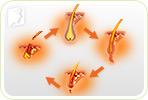
Losing your hair as a result of menopause can be an upsetting experience that jeopardizes your self-image. Women often feel unattractive when their hair begins to thin or shed so severely that bald spots develop. Hair loss is caused by a fluctuation in hormones and is a common symptom of menopause.
What Are My Options for Hair Replacement?
It can be difficult and in some cases, impossible, to get hair to regrow. However, there are steps a person can take to make hair loss less obvious and to have a look that still reflects their personality and personal style. It may also be helpful to join a support group from menopausal women or women experiencing hair loss in order to find a support system and get ideas for how to cope.
A New Hairstyle
Many women choose to confront hair loss by taking control of their appearance. A shorter hairstyle is often the first choice for women who experience hair loss related to menopause.
Extensions or Hair Pieces
If you only experience partial hair loss in a concentrated area, such as the crown of your head, extensions can make your hair appear fuller. Attachment methods include gluing hair onto the scalp or sewing and clipping hair pieces onto existing hair. Hair can be colored and cut to blend in with your natural locks.
Wigs
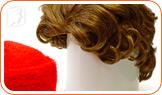
If your hair loss is substantial or if your hair is thinning all over, a wig will offer more coverage. This method has developed tremendously in the past decade, and now women are able to find a wider variety of styles and better quality wigs made with human hair. Half wigs are also available for women who experience balding at the crown.
Surgery
Surgical methods are sometimes used to combat hair loss in women, though they can be expensive and more complicated. One procedure involves placing hair follicles into the scalp to grow. It is beneficial because it is permanent solution and yields the most natural-looking results. Operations include scalp expansion, scalp reduction, and flap surgery. All three of these methods entail replacing the bald portion with a piece of scalp with hair follicles that are still productive.
More Information about Hair Loss
During perimenopause, hair loss can be attributed to a decreased amount of estrogen, a hormone that usually aids a steady growth of hair. Hair loss may also be caused by increased levels of testosterone, which often shrinks hair follicles. However, the causes behind hair loss can be complicated and are not always well understood. Click to find out more about hair loss treatments.
Sources
- Dr.McNair, Trisha. (n.d). Hair Loss. Retrieved from www.bbc.co.uk.
- Mayo Clinic.(n.d). Hair Loss. Retrieved from www.mayoclinic.com
- National Health Service. (2012). Hair loss myth buster. Retrieved November 23, 2015, from http://www.nhs.uk/Tools/Documents/Hairloss%20myth%20buster.htm
- American Hair Loss Association. (2010). Treatment. Retrieved November 23, 2015, from http://www.americanhairloss.org/women_hair_loss/treatment.asp