Menopause
Many women going through menopause may experience symptoms of fatigue and occasional nausea. Menopause is defined by the ceasing of menstruation. For menopause to have been officially reached, there has to have been an absence of menstrual periods for one year. This change occurs over midlife and differs among women, but usually women experience menopause between 45 and 55 years of age.
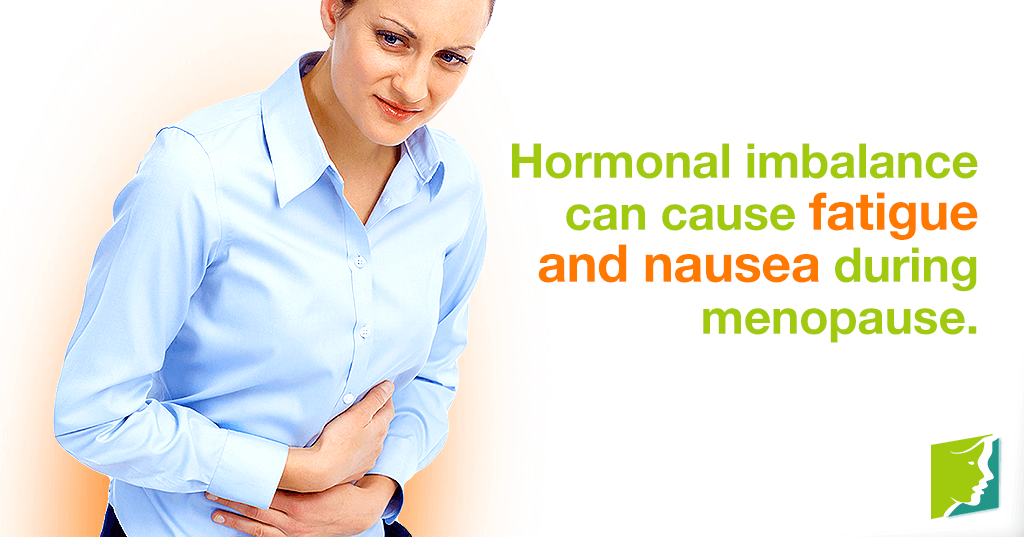
Fatigue is chronic mental and physical exhaustion that does not go away with sleep or rest. It can limit day-to-day activities and worsen other symptoms a person is experiencing, such as nausea. Nausea is feeling the urge to vomit, and can be experienced for many different reasons, such as an adverse effect from medicine.
What Is the Link between Fatigue and Nausea?
While many women may go through menopause without experiencing any symptoms of fatigue or nausea, these symptoms are still very common. Because of the difficulty in classifying fatigue or identifying a definitive cause, exact statistics are often hard to find.
The symptoms of fatigue and nausea, along with most menopausal symptoms, may be due to changing estrogen levels in the body. Fatigue and nausea are two lesser studied symptoms, so there is still a lot scientists need to learn about these symptoms before they can accurately pinpoint their causes.
Fatigue and nausea can be caused by hormone imbalances during menopause, but each of these can be a symptom of something larger or caused by something else, so it is important to see a medical practitioner if these symptoms persist, so that you can find the source of them.
How Can I Deal with Fatigue and Nausea?
Many different parts of the body, including the gastrointestinal tract, may be affected during menopause, and this can lead to nausea or fatigue. Nausea and fatigue can also be connected to other symptoms.
Recommended long-term changes include:
- Eat a high-fiber diet. The average American only gets about half of the daily recommended amount of fiber. Eating foods that contain fiber is important because fiber helps prevent constipation, diarrhea, and hemorrhoids. Foods that are high in fiber include legumes, beans, leafy greens, and coconut.
- Maintain physical activity. Cutting physical activity out of your life will not help your nausea or fatigue in the long run. It is also important for fatigued people to try to get the physical activity that they need. This entails at least 30 minutes of low impact exercises a day, like walking or biking, though it can be broken up into smaller segments.
- Seek counseling. Fatigue and nausea can both be caused by emotional stress and trauma. Many women feel emotional stress as they progress through menopause and the aging process. If you have an underlying emotional problem, it could help to seek therapy or talk to someone you trust, such as a partner, close friend, or relative.
In addition to lifestyle changes, natural remedies may also help reduce fatigue and nausea. Such alternate treatments are believed to bolster estrogen levels. Read on for more specific information regarding treatments for fatigue.
Sources
- Hutchinson, Susan M.D. "The Stages of a Woman's Life: Menstruation, Pregnancy, Nursing, Perimenopause, Menopause". November 2007.
- Love, Susan M.D. Menopause and Hormone Book. New York: Three Rivers Press, 2003.
- BMJ Group. "Menopause: What is it?" Patient Leaflet. 2007.