 Menopause
Crashing fatigue impacts a disproportionate number of women going through menopause. It can leave them feeling completely exhausted and lacking energy even if they haven't done a great deal of physical or mental exertion. If not addressed properly, the symptom can adversely affect their quality of life.
Continue reading to learn all about crashing fatigue during menopause so that you can manage and treat the energy-sucking symptom in an effective manner.

About Crashing Fatigue
Crashing fatigue is defined as a sudden and overwhelming feeling of weakness, exhaustion, and reduced energy, which can strike at any moment of the day and can impact a woman out of seemingly nowhere. It is different than drowsiness, which implies an actual urge to sleep.
Crashing fatigue during menopause differs from chronic fatigue because with the latter, the sufferer tends to feel tired and lacks energy on a consistent basis. This tiredness does not improve with bed rest, and periods of chronic fatigue typically worsen with physical or mental activity.
Crashing Fatigue Symptoms
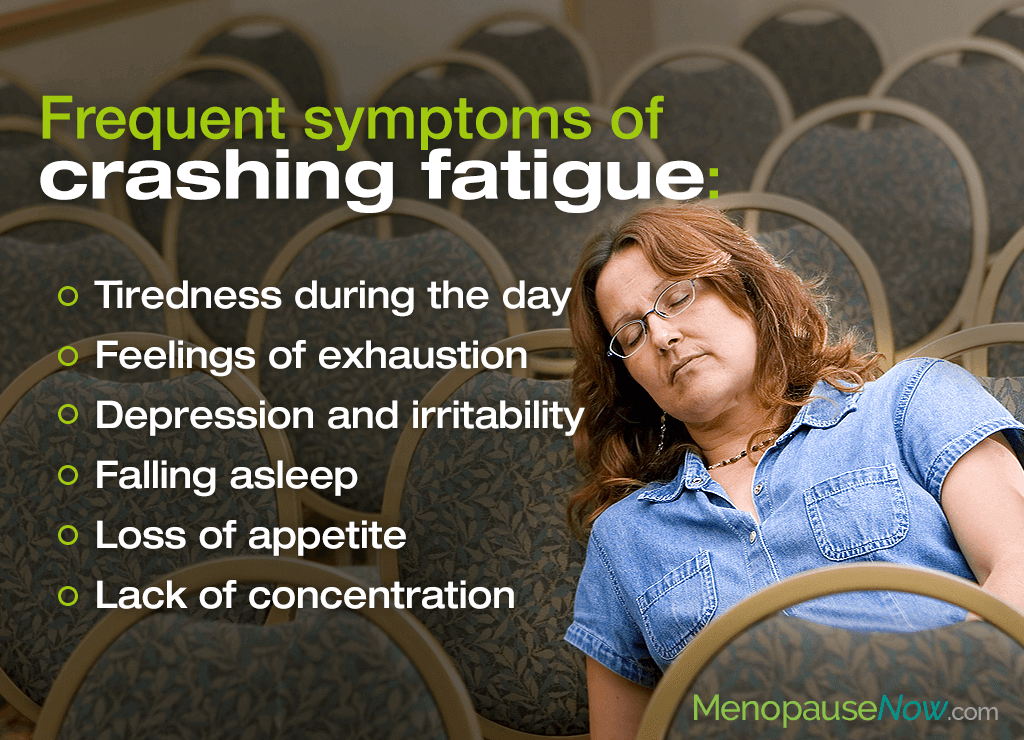
These are the most commonly spotted "red flags" for menopausal crashing fatigue:
- Sudden feeling of lethargy
- Tiredness during the day
- Feelings of exhaustion
- Depression
- Loss of appetite
- Lack of concentration
- The need to nap at unusual times
- Inability to focus or feel engaged
Lack of sleep or other sleep disorders, which may lead to feelings of crashing fatigue, can also manifest as irritability or difficulty concentrating on daily tasks. This can negatively impact personal and professional relationships.
Crashing Fatigue Causes
Feelings of tiredness and fatigue are commonly reported symptoms of menopause. However, it is hard to know if symptoms like tiredness, crashing fatigue, and general fatigue are caused directly by hormonal fluctuations because they also might have other causes, including stress, psychological issues, underlying medical conditions, and lifestyle habits.
Non-hormonal Crashing Fatigue Causes
Stress is a major risk factor for chronic fatigue syndrome, while general fatigue can also be brought on by psychological conditions such as anxiety, depression, or grief.
Underlying medical conditions such as anemia, thyroid problems, obesity, sleep apnea, diabetes, heart disease, cancer, and liver or kidney problems can also lead to crashing fatigue in perimenopause.
Furthermore, crashing fatigue can be caused by lifestyle choices of alcohol abuse, caffeine consumption, inactivity, poor sleep patterns, or unhealthy eating habits.
Hormonal Crashing Fatigue Causes
Estrogen hormones may have an effect on tiredness since they regulate the level of cortisol, a stress hormone whose excess can lead to drowsiness. If estrogen levels drop, cortisol goes uncontrolled, and this leads to crashing fatigue during menopause.
Managing Crashing Fatigue
The main way to manage crashing fatigue is through lifestyle changes.
One of the most important practice is sticking to a regular and healthy sleep pattern. During the few hours leading up to when you go to sleep, try not to eat heavy meals, drink caffeine, or be exposed to blue light from electronics, which interferes with melatonin secretion and your circadian rhythm.
Also, partake in regular, stress-reduction exercises at least 30 minutes a day, five days a week. These can include yoga, Pilates, running, tennis, swimming, and other aerobic and anaerobic activities to relieve tension and, ultimately, promote hormonal balance.
Alternative Treatments for Crashing Fatigue
Herbal supplements are some of the most popular options for women suffering from sudden crashing fatigue. These supplements either introduce hormones into the body - phytoestrogenic supplements - or stimulate the body to produce its own, as is the case with hormone-regulating supplements, ultimately battling not only crashing fatigue, but other menopausal symptoms as well.
Other alternative methods that can be implanted to bring women relief include aromatherapy, meditation, or massage therapy. Talking to a counselor or therapist may also help if you think your crashing fatigue may be triggered by stress, anxiety, depression, or another psychological problem.
Nevertheless, little research has been done on crashing fatigue. So, it is difficult to say how well any of these treatments will work. Choose options that you feel are best for you and your body.
Recommendations
Women suffering from crashing fatigue during menopause are recommended to start with non-invasive approaches before pursuing pharmaceutical options, such as hormone replacement therapy (HRT). Fatigue treatments focus on many of the aforementioned techniques as well as others that will eventually promote hormonal equilibrium for symptom relief. Click on the previous link to be one step closer to optimal health and well-being.
Sources
- Harvard Health Publishing. (2018). Blue light has a dark side. Retrieved May 10, 2019, from https://www.health.harvard.edu/staying-healthy/blue-light-has-a-dark-side
- Mayo Clinic. (2018). Chronic fatigue syndrome: Symptoms & causes | Fatigue: Causes. Retrieved May 10, 2019, from https://www.mayoclinic.org/diseases-conditions/chronic-fatigue-syndrome/symptoms-causes/syc-20360490 | https://www.mayoclinic.org/symptoms/fatigue/basics/causes/sym-20050894
- NHS. (2018). Self-help tips to fight tiredness. Retrieved May 10, 2019, from https://www.nhs.uk/live-well/sleep-and-tiredness/self-help-tips-to-fight-fatigue/