 Menopause
While not as well-known as hot flashes or irregular periods, dizziness is a common symptom of menopause caused by hormonal fluctuations. Many menopausal women report bouts of dizziness and vertigo, which may or may not be associated with other menopause symptoms, such as hot flashes and anxiety.
By better understanding dizziness in relation to menopause, women can find the best treatment options for alleviating their symptoms. Learn more about dizziness, its symptoms, its causes, and how to treat it.

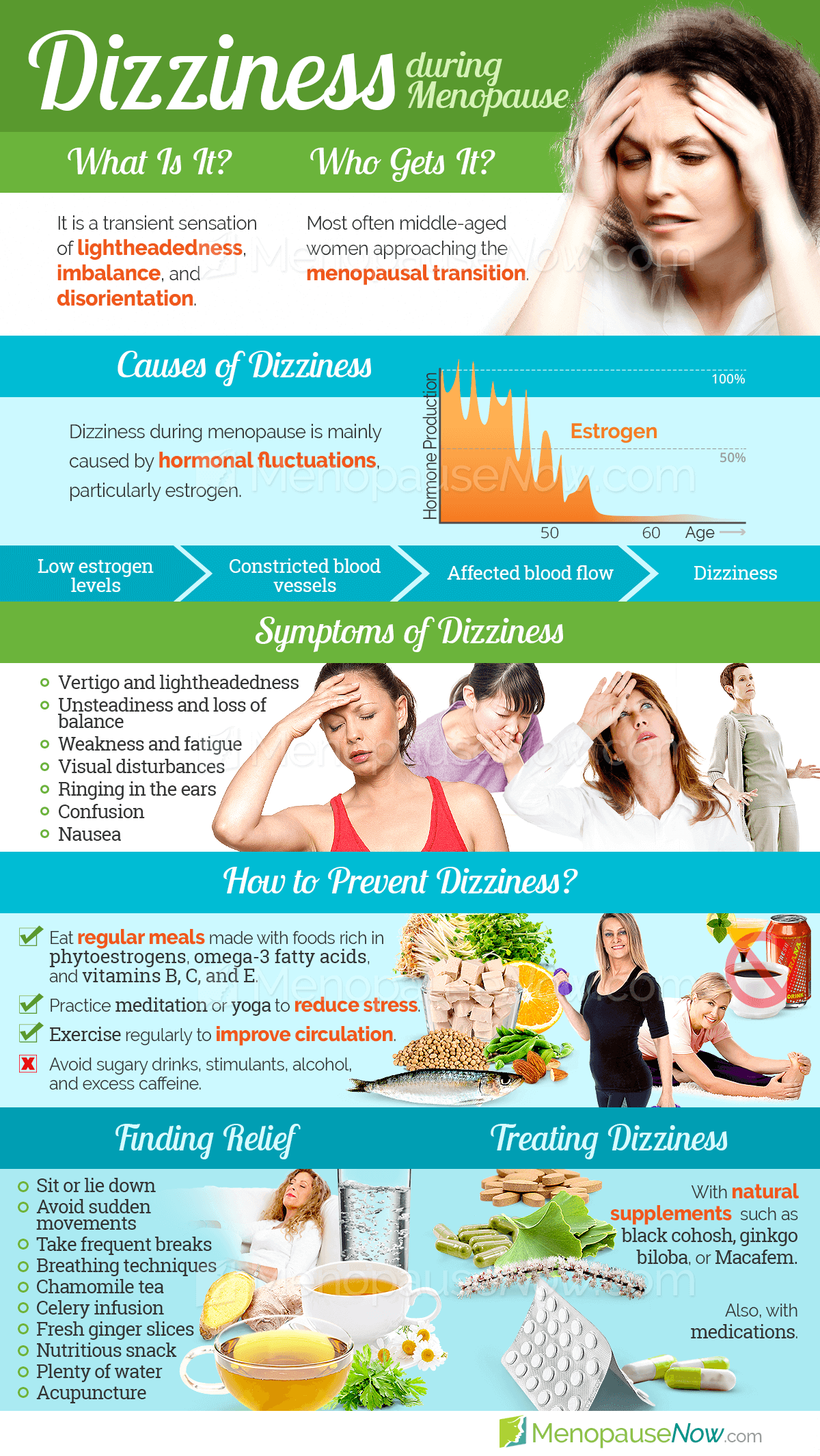
About Dizziness during Menopause
Did You Know?
Dizziness is one of the most common complaints for which American adults seek medical attention.
Dizziness is a general term used to describe transient sensations of lightheadedness, imbalance, and disorientation. Dizziness can be triggered when a person sits or stands up too quickly, is sick, dehydrated, or is not eating properly. Episodes of dizziness common to menopause are often short-lived, lasting only seconds in duration. Nonetheless, these episodes can be disturbing and sometimes even temporarily debilitating.
Types of Dizziness
Although women commonly describe their unsteady sensations as feeling dizzy, there are actually four distinct conditions that might bring about those feelings. They are often classified as types of dizziness:
- Vertigo is a false sensation of motion, often described as spinning and whirling.
- Disequilibrium is a term to describe loss of balance and unsteadiness, causing difficulties walking.
- Lightheadedness is a general state of floating or wooziness, often after standing up too quickly.
- Presyncope is a more intense form of lightheadedness when a person feels about to faint.
Dizziness from vertigo often happens when one or more of the body's balance control centers are malfunctioning.
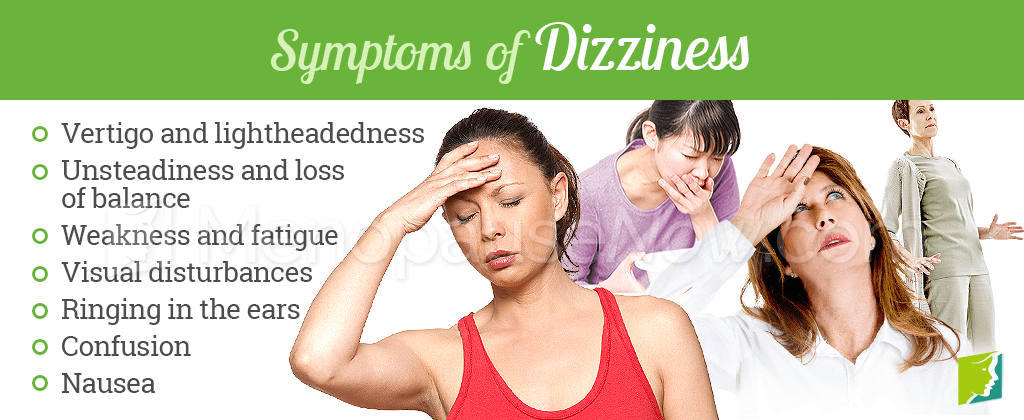
Episodes of dizziness can be characterized a number of signs and symptoms. Please keep reading to learn about the symptoms of dizziness during menopause.


Symptoms of Dizziness during Menopause
Dizziness symptoms can strike at any time of day. While most symptoms of dizziness last seconds, they can make a person feel out of sorts for an extended duration and can sometimes impede on daily functioning.
While most people who experience dizziness are familiar with these symptoms, many do not understand the cause of dizziness. Understanding the common causes of dizziness is often the first step in learning how to manage these episodes. Read on to discover more about the causes of dizziness.
Causes of Dizziness during Menopause
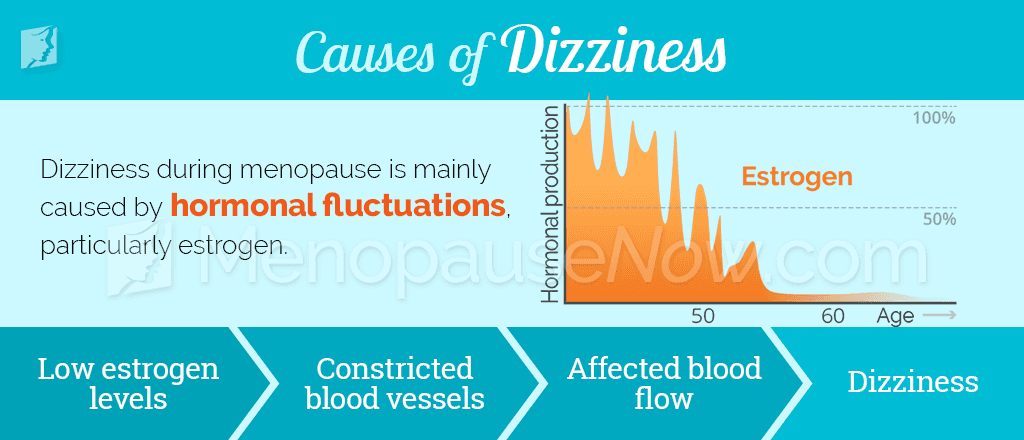
During menopause, the root cause of dizziness is often hormone fluctuations. Dizziness can also be related to other symptoms of menopause. In rare cases, dizziness during menopause can indicate a more serious condition. While these cases are very rare, it is important to know all of the possible causes of dizziness, outlined below.
Hormonal Causes
Changing estrogen levels during menopause can produce changes in the blood vessels and nervous system, which can cause bouts of dizziness.
Menopausal Causes
Other menopause symptoms can also cause a woman to feel dizzy. These include:
- Hot flashes
- Migraines
- Fatigue
- Anxiety and panic disorder
Other Causes
- Low blood pressure
- Dehydration
- Low blood sugar (hypoglycemia)
- Arthritis (especially of the neck)
- Medication use
- Cold and flu
- Viral infections
- Heart problems
- Stroke
Aside from these varied causes of dizziness, it is important to know that one's sense of balance and equilibrium depends on the proper functioning of at least two of the body's three balance control centers: the eyes, ears, and sensory nerves. If the brain cannot process all of the information from these centers, the messages become contradictory, or if these systems are not working properly, a person can experience dizziness, or a loss of balance or equilibrium. Low blood pressure and other cardiovascular system changes can also lead to dizziness. Continue reading to learn more about when the causes of dizziness may warrant a visit to the doctor.

Extreme Cases of Dizziness during Menopause
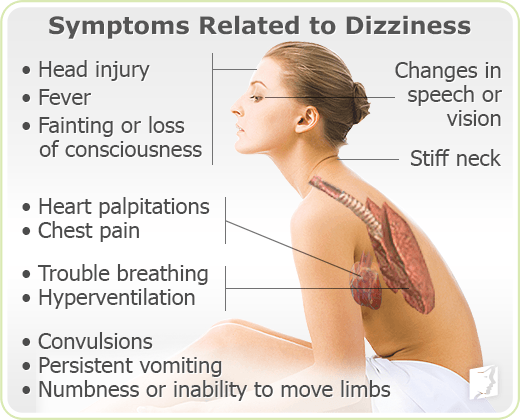
While most menopausal women who experience dizziness do not require medical attention, it is important to understand when a visit to the doctor may be necessary. If dizziness is accompanied by any of the symptoms to the right, a woman should contact her healthcare professional as soon as possible.
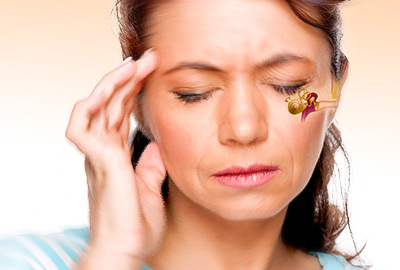
If hearing or ear problems occur with dizziness, it may be wise to speak with a doctor to rule out or treat ear disorders, such as Meniere's disease. Read on to learn more about how dizziness can be treated.
Dizziness during Menopause Treatments
Treatment of dizziness often depends on the underlying cause. Because the most common cause of dizziness during menopause is hormonal fluctuations, treating this root cause often provides relief. It is generally recommended that patients begin with the least invasive approach to dizziness treatment.

Lifestyle changes and self-care are often the first steps in treating dizziness associated with menopause. Eating healthy, drinking enough fluids, and exercising regularly can help to reduce episodes of dizziness. Women who become dizzy when they stand up should take precautions to avoid getting up too quickly or making sudden changes in posture.
While these lifestyle changes can help, they are unable to treat the root cause of dizziness in menopause: hormonal changes. Fortunately, approaches in alternative medicine are available to treat the hormonal causes of dizziness during menopause. Often, the best approach to treating dizziness during menopause is one that combines alternative medicine with lifestyle changes.

Most experts recommend that women who suffer from dizziness and wish to treat it begin with lifestyle changes, then move onto alternative medicine, and finally, look to medications if nothing else seems to work. Click on the following link to learn specific treatments for dizziness in these three categories.



Sources
- Love, S. (2003). Menopause and Hormone Book. New York: Three Rivers Press.
- Ogun, O.A. et al. (2014). Menopause and benign paroxysmal positional vertigo. Menopause, 21(8), 886-889. doi: 10.1097/GME.0000000000000190.
- Owada, S. & Suzuki, M. (2014). The relationship between vasomotor symptoms and menopause-associated dizziness. Acta Oto-laryngologica, 134(2), 146-150. doi: 10.3109/00016489.2013.841991
- Park, J.H. & Viirre, E. (2010). Vestibular migraine may be an important cause of dizziness/vertigo in perimenopausal period. Medical Hypotheses, 75(5), 409-414. doi: 10.1016/j.mehy.2009.04.054