 Menopause
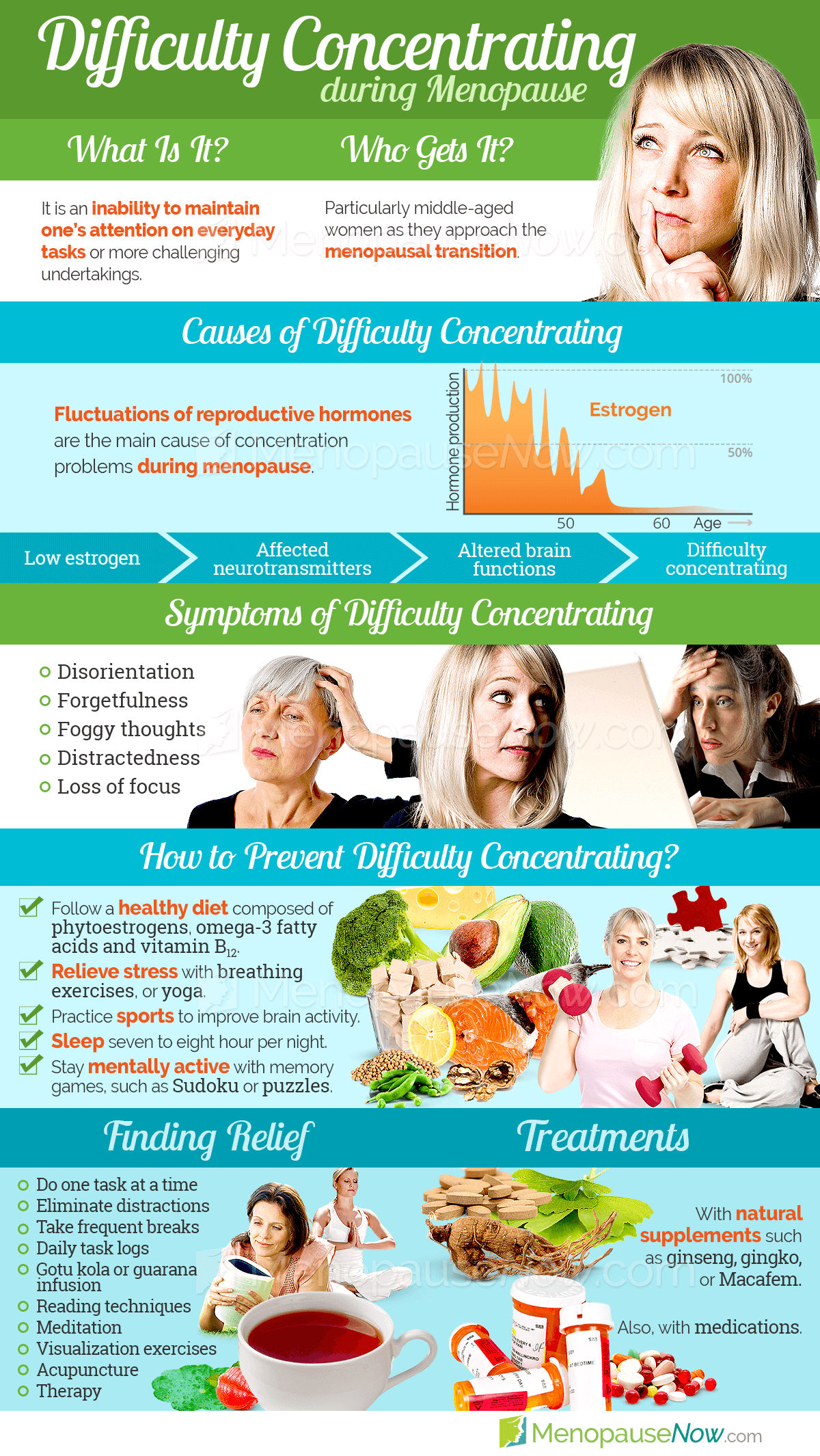
For those women who are experiencing difficulty concentrating as a result of menopause, this symptom can often be confusing, even unsettling. There is a variety of reasons why a woman may experience difficulty concentrating. For most women, however, it is typically due to hormone fluctuations that occur during menopause.
Learn more about difficulty concentrating, its causes, and the treatment options in order to gain back control of one's own sense of focus.
About Difficulty Concentrating
While difficulty concentrating is an incredibly common symptom, it can be subtle at times. For this reason, it is important to know the common characteristics of difficulty concentrating.
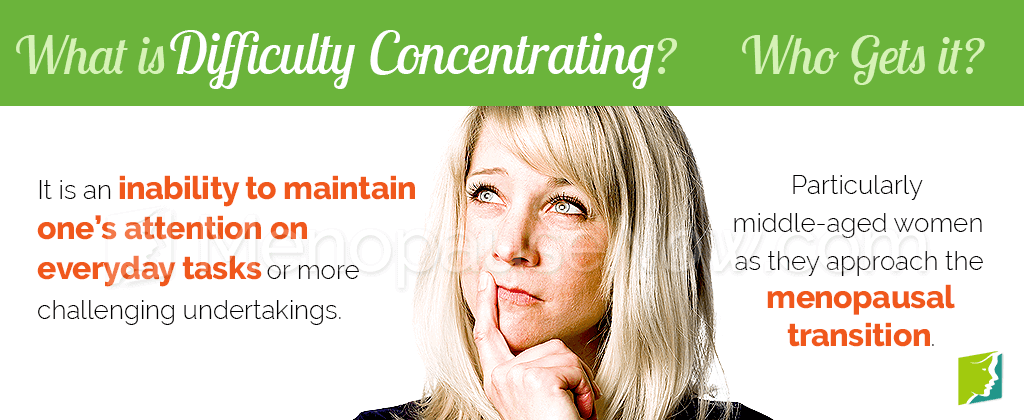
Difficulty concentrating is defined as the inability to concentrate on everyday tasks or unusual or complex tasks. Along with this, women may experience disorientation, general forgetfulness, and lost trains of thought.
This can be a cause for concern for many women who typically possess the ability to concentrate, and it may lead to problems in the workplace or in a woman's personal life. In addition, women may feel some concern that this is an early sign of more serious conditions such as Alzheimer's.
To ease concerns about difficulty concentrating, it is beneficial to know what the exact characteristics are.
Characteristics of difficulty concentrating
Common Characteristics of Difficulty Concentrating
- Lost train of thought
- Disorientation
- Fuzzy thinking
- Forgetfulness
- Inability to concentrate for long periods of time
- Inability to focus on complex tasks
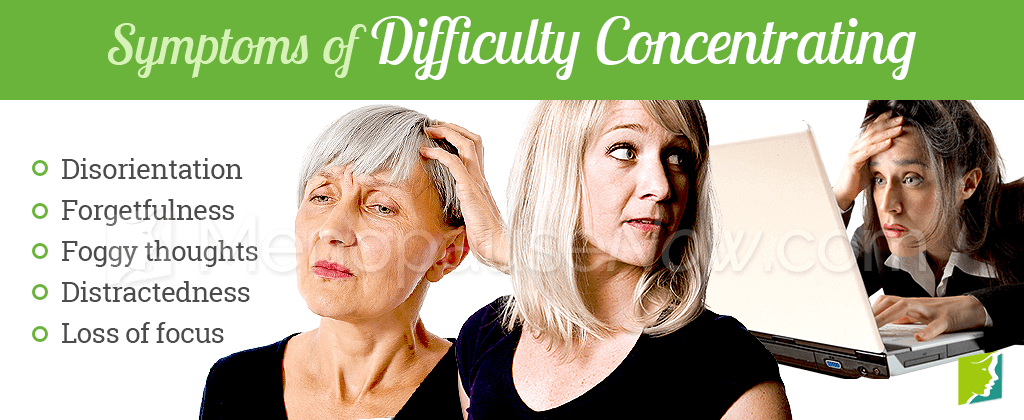
The box on the right shows the most commonly experienced characteristics of difficulty concentrating. A menopausal woman may notice one or several of these signs to varying degrees of intensity.
If a woman is experiencing these characteristics of difficulty concentrating, it is helpful to understand why they are occurring.
Click on the following link for more information about difficulty concentrating, or continue reading to learn more about its specific causes.


Causes of Difficulty Concentrating
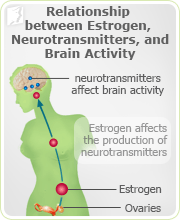
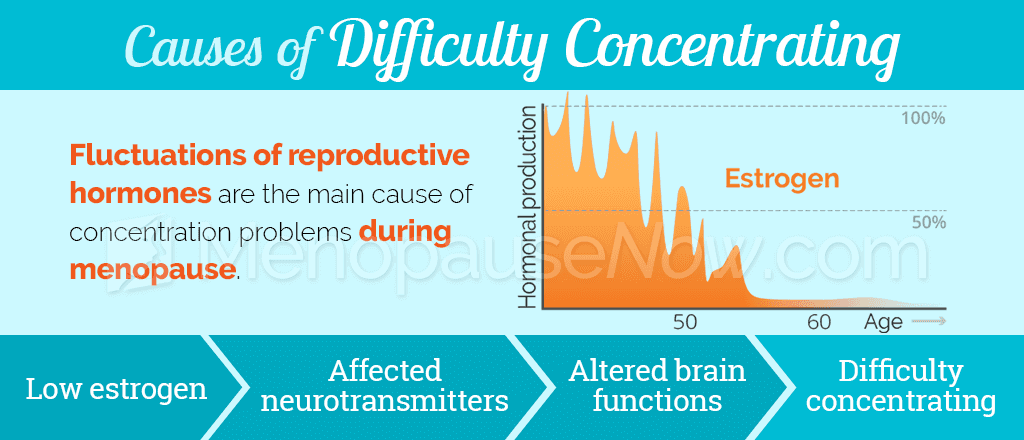
While a number of factors can trigger difficulty concentrating, hormone fluctuations are typically why this occurs during menopause. Estrogen in particular plays a key role in the numerous brain functions.
There are several neurotransmitters in the brain that regulate cognitive function, including normal memory and the ability to concentrate. Acetylcholine, serotonin, and norepinephrine have all been shown to influence cognitive abilities. If there is a shortage in these neurotransmitters, there may be a decrease in cognitive function, leading to difficulty concentrating
Estrogen has an effect on the production of all three of these neurotransmitters. When estrogen levels are adequate, production is more stable.
Related Menopause Symptoms
- Sleep disorders
- Fatigue
- Depression
- Anxiety
- Pain disorders
- Hot flashes
In addition to the primary hormonal causes behind difficulty concentrating, many women may have concentration issues that stem from other menopause symptoms. Sleep disorders and fatigue can render a woman too exhausted to concentrate properly on daily tasks at hand. Psychological symptoms such as depression, anxiety, or panic disorders can also have a hand in difficulty concentrating. When a woman is under stress, she may not be able to focus to the best of her ability.
Other Causes of Difficulty Concentrating
- Natural aging
- Hyperactivity disorders
- Drug use
- Poor nutrition
- Neurological disorders
Difficulty concentrating is mainly attributed to the fluctuations in estrogen that influence neurotransmitter levels in the brain. However, there are many contributing factors that can influence a woman's level of concentration. Fortunately, there are many different treatment options available for managing this symptom.
Click on the following link to find more information about the causes of difficulty concentrating, or read on to learn more about ways to overcome difficulty concentrating to regain control.


Difficulty Concentrating Treatments
To treat this problematic symptom, a three-tiered approach can be utilized. It is recommended to start with the least invasive option, and then move towards more drastic measures if necessary.
1. Lifestyle changes. Some easy lifestyle tips can help sufferers cope with difficulty concentrating. A healthy diet rich in brain-friendly nutrients like omega-3 and omega-6 - found in fish and walnuts, for example - can help. Cutting back on caffeine, alcohol, and sugar can also help improve concentration.
Getting better quality of sleep goes a long way as well. Stress-relieving techniques like meditation or yoga are also helpful in aiding a woman's ability to concentrate, and brain exercises such as crossword puzzles can improve overall focus.
Did You Know?
Intense aerobic exercise can increase brain volume in older adults.
2. Alternative medicine. If coping methods and simple lifestyle changes are not working and a woman is still experiencing difficulty concentrating, there are further treatment options available. Alternative medicines that address the hormonal imbalance at the source are the most effective treatment method, particularly in conjunction with lifestyle changes.
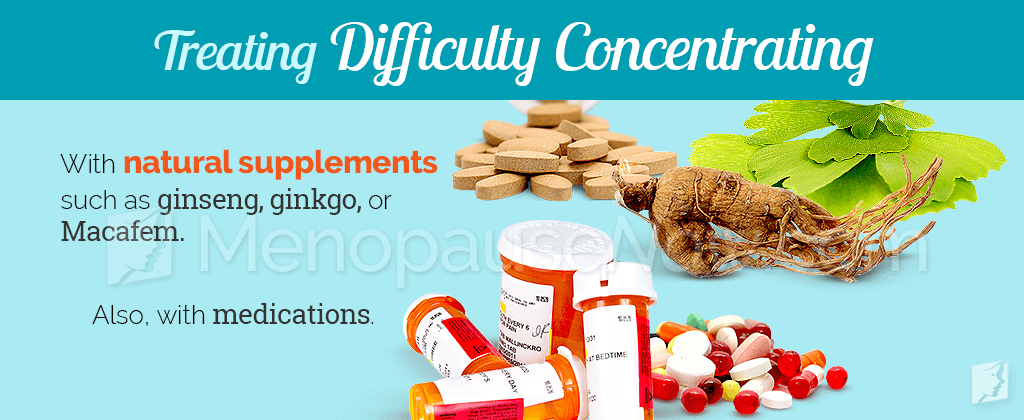
3. Medications. For more serious incidences of difficulty concentrating, increasingly drastic measures can be taken, but they should always be undertaken with the help of a medical professional.
Women who wish to improve their concentration should begin with lifestyle changes, then move onto alternative medicines, and finally, consider medications if nothing else seems to work. Click on the following link to learn about specific treatments for difficulty concentrating in these three categories.




Sources
- Colcombe, S.J. et al. (2006). Aerobic exercise training increases brain volume in aging humans. The journals of gerontology, 61(11), 1166-1170. Retrieved from http://www.ncbi.nlm.nih.gov/pubmed/17167157
- Food and Drug Administration. (2010). Coping with Memory loss. Retrieved May 5, 2016, from http://www.fda.gov/forconsumers/consumerupdates/ucm107783.htm
- Henderson, V.W. (2008). Cognitive Changes after Menopause: Influence of Estrogen. Clinical Obstetrics and Gynecology, 51(3), 614-626. doi: 10.1097/GRF.0b013e318180ba10
- Greendale, G.A. , Derby, C.A. & Maki, P.M. (2012). Perimenopause and Cognition. Obstetrics and gynecology clinics of North America, 38(3), 519-535. doi: 10.1016/j.ogc.2011.05.007
- Kulzow, N. et al. (2016). Impact of Omega-3 Fatty Acid Supplementation on Memory Functions in Healthy Older Adults. Journal of Alzheimer's Disease, 51(3), 713-725. doi: 10.3233/JAD-150886
- Matsuda, Y. , Hirano, H. & Watanabe, Y. (2002). Effects of estrogen on acetylcholine release in frontal cortex of female rats: involvement of serotonergic neuronal systems. Brain Research, 937(1-2), 58-65. Retrieved from http://www.ncbi.nlm.nih.gov/pubmed/12020863
- Uchida, S. & Kawashima, R. (2008). Reading and solving mental arithmetic problems improves cognitive functions of normal aged people: a randomized controlled study. Age, 30(1), 21-29. doi: 10.1007/s11357-007-9044-x