Menopause
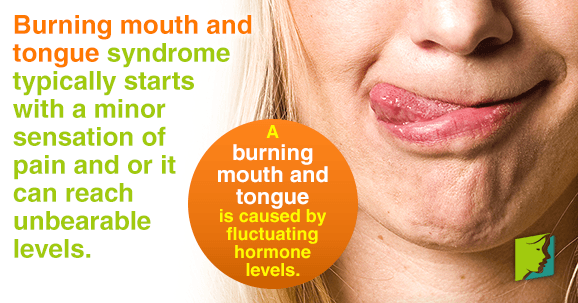
Often, women going through menopause are afflicted by the sensation of a burning mouth or tongue. Most commonly known as burning mouth syndrome, it is described as a burning sensation on the tongue, gums, lips, inside of the cheeks, or the back of the mouth and throat. A burning mouth and tongue as experienced during menopause is typically regarded as resulting from fluctuating hormone levels that occur during this time.
Keep reading for more detailed information on how to deal with the symptoms of a burning mouth and tongue.
What Causes this Bizarre Sensation of Burning Mouth and Tongue?
Quick Fact
The exact cause of burning mouth syndrome is often difficult to pin down, and pain may continue for months or years.
Burning mouth syndrome is a very complex condition where a burning pain occurs on the tongue or lips, or over widespread areas involving the whole mouth without any obvious reason. The symptoms has for a long time been linked with a variety of other conditions, such as menopause, psychological problems, nutritional deficiencies, and disorders of the mouth like oral thrush or dry mouth. Some researchers have suggested damaged nerves could be a possible cause.
What Does Burning Mouth and Tongue Feel Like?
Burning mouth and tongue syndrome typically starts with a minor sensation of pain or burning in the mornings and escalates through the day until it can reach almost unbearable levels. A burning mouth and tongue can also give things that touch the tongue a bitter, metallic taste - some would argue that this is in line with its other strange symptoms.
Is Menopause the Main Cause of a Burning Mouth and Tongue?
This symptom is not clearly understood, and consequently, neither are its causes. Aside from menopause being the obvious culprit - given the prevalence of the symptom in menopausal women - there are a number of factors that could be responsible. The following is a list of other potential causes:
Irritating dentures. Dentures (false teeth) may place stress on some of the muscles and tissues of the mouth. The materials used in dentures can also irritate the tissues in the mouth.
Nerve disturbance or damage (neuropathy). Damage to nerves that control taste and pain in the tongue may also result in a burning mouth and tongue sensation.
Endocrine disorders. Conditions like diabetes and an underactive thyroid (hypothyroidism) may contribute to burning mouth. The body's oral tissues may react to the high blood sugar levels typically found in people with diabetes.
What Can I Do about a Burning Mouth and Tongue?
The regular approach of medical professionals is to treat burning mouth and tongue syndrome with different generic medications more commonly associated with other symptoms. For example, antidepressants and anti-psychotics have been used along with to desensitize patients' mouths from pain.
If, however, the burning in the mouth and tongue is being provoked by hormone fluctuations, there are some very effective alternative remedies that work by helping to regulate the body's own hormone production.
More specific information about balancing hormone levels to combat burning mouth and tongue symptoms.
Sources
- Aravidhan, R. et al. (2014). Burning mouth syndrome: A review on its diagnostic and therapeutic approach. Journal of Pharmacy & BioAllied Sciences, 6(Suppl 1), S21-S25. doi: 10.4103/0975-7406.137255
- Dahiya, P. et al. (2013). Burning Mouth Syndrome and Menopause. International Journal of Preventive Medicine, 4(1), 15-20. Retrieved from http://www.ncbi.nlm.nih.gov/pmc/articles/PMC3570906/